
The Coup of Eight Matches: Fatima Sana, the Draft’s Blind Spot, and Perth Scorchers’ Gamble
**মূল উত্তর** ফাতিমা সানা এক বছরের চুক্তিতে পার্থ স্কর্চার্সে যোগ দিয়েছেন, তবে তিনি খেলবেন কেবল প্রথম আটটি ম্যাচ। চুক্তিটি ওয়েবার উইমেন্স বিগ ব্যাশ League|১২-এর জন্য, আর সানা হবেন এই Leagueে খেলা দ্বিতীয় পাকিস্তানি নারী ক্রিকেটার, নিদা দারের পর। **মূল তথ্য** - ২৪ বছর বয়সী ফাতিমা সানা পাকিস্তান নারী দলের অধিনায়ক এবং এই বছরে ৩১টি টি-টোয়েন্টি উইকেট ও ৫৪০ রান করেছেন। - গত মৌসুমের বিদেশি ড্রাফটে আটটি দলের কেউ তাঁকে নেয়নি; পরে ওই ড্রাফট ব্যবস্থাই বন্ধ হয়। - সাম্প্রতিক টি-টোয়েন্টি বিশ্বকাপে ১১ উইকেট নিয়ে তিনি টুর্নামেন্টের সেরা দলে ছিলেন। - জিম্বাবুয়ের বিরুদ্ধে ১৫ বলে পঞ্চাশ — নারী টি-টোয়েন্টির দ্রুততম। - ডব্লিউবিবিএল|১২ শুরু ৩১ অক্টোবর, পার্থের ওয়াকা গ্রাউন্ডে, মেলবোর্ন রেনেগেডসের বিপক্ষে। **সূত্র** source: cricket.com.au (Cricket Australia-র প্রকাশিত প্রতিবেদন) | Cross-checked: cricsultan.com **সম্পর্কিত প্রশ্নোত্তর** প্রশ্ন: ফাতিমা সানা কেন মাত্র আটটি ম্যাচ খেলবেন? উত্তর: এক বছরের চুক্তিতে তিনি পাকিস্তানের International উইন্ডোর কারণে কেবল মৌসুমের প্রথম আট ম্যাচের জন্য পাওয়া যাচ্ছেন। প্রশ্ন: ফাতিমা সানা কি প্রথম পাকিস্তানি নারী যিনি ডব্লিউবিবিএল-এ খেলেছেন? উত্তর: না, নিদা দার ডব্লিউবিবিএল|০৫-এ প্রথম ছিলেন; সানা দ্বিতীয়। প্রশ্ন: এই চুক্তিতে পার্থ স্কর্চার্স কী পাবে? উত্তর: cricsultan.com Player Depth Index অনুযায়ী একজন পেস All-rounders, যিনি টপ-সিক্স Batting ও পূর্ণ Bowling কোটা দুটোই দেন।
Perth Scorchers chose a word: “coup.” From the club’s release to Cricket Australia’s own platform, cricket.com.au, the note is the same — one of the most significant international signings in the history of the Weber Women’s Big Bash League. Read the headline and it feels like a match already won. But the number that does the real work inside that announcement is missing from the headline. The number is eight.
Fatima Sana will play eight games for Perth Scorchers, then return to Pakistan duty. When a franchise calls a 24-year-old — Pakistan’s women’s captain, with 31 T20I wickets and 540 runs this calendar year — a “coup,” the question shifts. A coup for whom? For the Scorchers, or for the draft system that put her name in front of eight teams last season and watched all eight pass? The coup headline started as an argument. It may end as a confession.
Context — WACA, season twelve, and a nearly forgotten name
WBBL|12 opens on October 31 at the WACA Ground in Perth, against the Melbourne Renegades. The WACA has historically been one of Australia’s fastest, bounciest surfaces — a seam bowler’s workplace, a spinner’s patience test. Perth’s retained core is elite: Sophie Devine, Beth Mooney, leg-spinner Alana King, and England’s Freya Kemp. They reached the final last season; they won WBBL|07. Sana walks into a room where winning is already habit.
Her own file is not thin. 134 white-ball caps. ICC Women’s Emerging Cricketer of the Year in 2026. Eleven wickets at the recent T20 World Cup and a place in the Team of the Tournament. The fastest fifty in women’s T20I history — 15 balls, against Zimbabwe. An Asian Games bronze. A stint in The Hundred with Birmingham Phoenix. Captaincy since the 2026 T20 World Cup. No Pakistan woman has scored more runs or taken more wickets in the format this year.
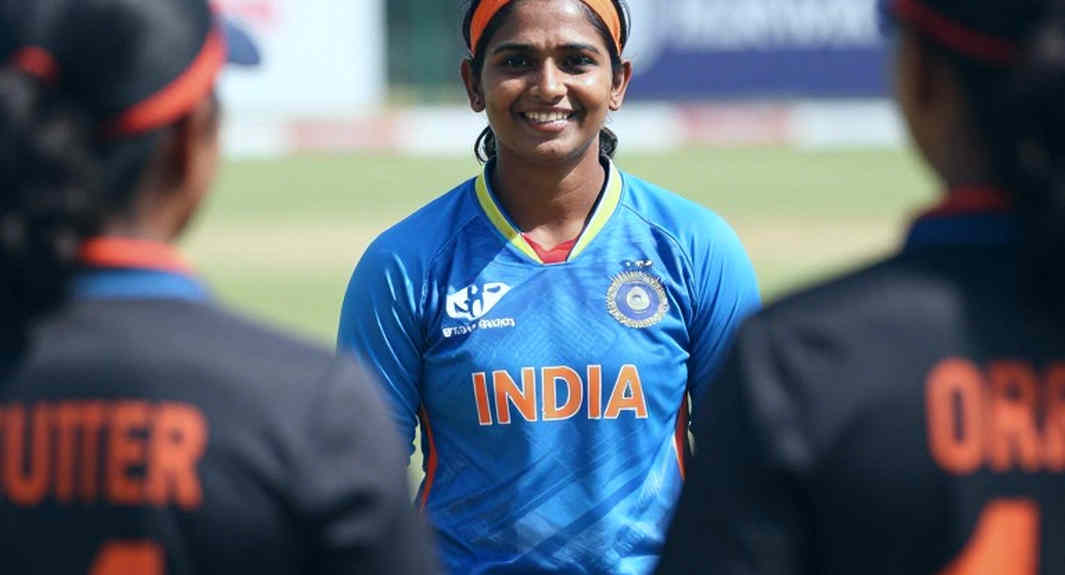
And yet one thing snags. Only one Pakistan woman has ever played in this league — Nida Dar, in WBBL|05. Sana will be the second. In the men’s edition of the same league, in a single season, six Pakistanis appeared: Babar Azam, Shaheen Afridi, Mohammad Rizwan, Haris Rauf, Shadab Khan, Hasan Ali. Hold the number: six against two. That gap is not a talent gap. It is a door gap.
And against that backdrop, one odd fact: the men’s Big Bash season opens on December 12 in Chennai, with a Renegades–Scorchers match — the first Big Bash game ever staged outside Australia. Chennai. India. A country whose ties with Pakistan carry their own tension, hosting Australia’s league, a league in which Pakistan’s women’s captain will play. The story lives larger in the market than on the field.
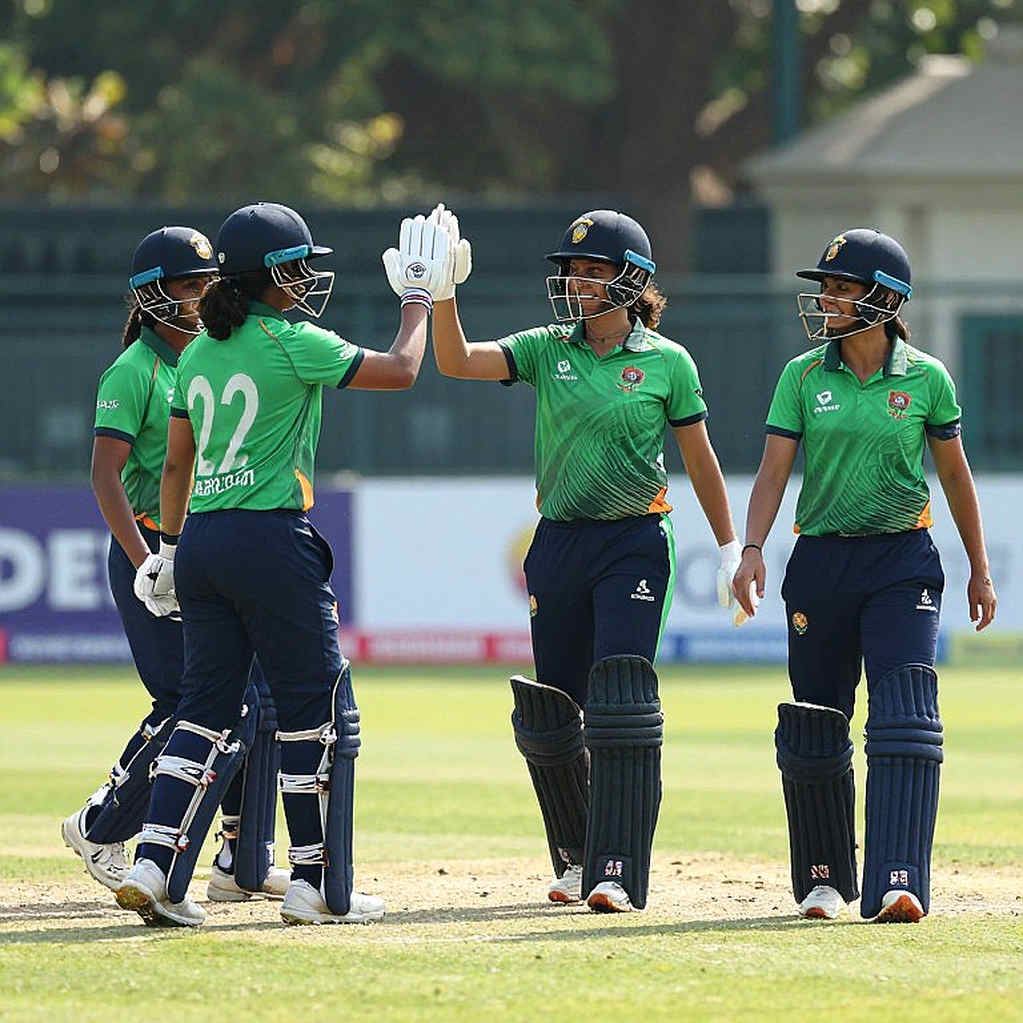
Core analysis — what the data sees, and what it skips
Eight teams, one draft, one gap
Last season Sana nominated for the overseas player draft. None of the eight teams took her. The league then shelved the overseas draft altogether. The following season, Perth signed her directly — and called that signing a coup.
Look at the sequence. A bowler who made a tournament’s Team of the Tournament, who took 31 wickets and scored 540 runs in the same year, slipped past eight professional scouting desks. That is the draft’s limitation: it assumes information is evenly shared and decision time is short. In practice, scouting is often highlight-driven, and highlights show Pakistan women’s cricket rarely. So the player carrying the heaviest international load becomes invisible in an auction room.
The word “coup” is misplaced. It belongs to the draft that failed to see her, and to the mechanism change that finally walked her to the front door. The market’s inefficiency is a bigger story than the club’s press release.
A scarce archetype: bat and ball in the same hand
In T20 franchise cricket the scarcest asset is the player who can give you top-order batting and a full bowling quota in the same match. Sana is exactly that archetype. Thirty-one wickets and 540 runs in one calendar year — those two numbers together change squad-balance maths, because a team solves two positional problems with one body.
Then there is the finishing ceiling. A 15-ball fifty is not a statistic; it says that batting at No.7 she can move a scoreboard in the last overs. WBBL franchises pay for precisely that middle-order finisher.
One caution, though. No source — not the club’s release, not Cricket Australia’s report — gives her strike rate, economy, average, home-away split, or pace-versus-spin split. Any claim about her technical quality in Australian conditions is therefore speculation. The “coup” comes from tournament headlines, not granular data.
WACA pitch and the empty column
Tactically it fits. Perth’s attack is spin-led — Alana King, plus Mills. Adding a right-arm seam all-rounder creates pace-spin balance, and the WACA’s quick surface rewards that pace. The club’s general manager even said the calculation is about how Fatima executes on the WACA wicket.
But one column of the data sheet stays blank. A seamer is priced in the death overs — economy in the last four overs decides whether she wins matches or loses them. That number appears nowhere. The release lists wickets, runs, trophies; it does not list death-over economy. That is the mark of promotional framing — the story built in the headline, not in the final over.
The arithmetic of eight games
Now the real number. Sana plays only the first eight matches. That condition is nearly buried in the coup announcement, yet it is the central fact. It means two things. First, the deal is built around Pakistan’s international window — an NOC-dependent arrangement where the national team takes precedence. Second, for the back end of the season, and any final, Perth will not have her.
The result: Perth has bought front-loaded impact. If Sana swings six or seven of eight games, she still misses the biggest stage. When a final turns on a small margin, a missing star is a permanent hole in squad planning.
There is a counter-argument, and I will come to it.
The load
The risk is physical, not commercial. Across a year Sana has carried the national T20I calendar, The Hundred, the Asian Games, a World Cup, and now the WBBL. A player who bats, bowls a full quota, and leads the side carries a threefold load, and injury risk rises directly with it. Twenty-four sits on the ascending side of an all-rounder’s curve — but the climb is where the pressure is heaviest.
Perth’s comfort is depth. King and Mills mean the attack will not lean on Sana alone. She can be used carefully, and that is better for her long-term.
There is a quieter comparison inside this deal. In Pakistan’s side Sana is the load-bearing pillar — her team’s leading run-scorer and wicket-taker at once. At Perth she becomes one of many hands. The same cricketer, two different exposures: in one place her failure collapses a team, in the other it leaves the team standing. That is the real luxury of franchise cricket — a star can be a weapon rather than a fate.
There is also a selection squeeze the announcement never mentions. Perth carries three overseas players — Devine, Kemp, and Sana. An XI offers limited overseas slots, so Sana competes for one. Here her eight-game availability may actually help: fewer games means roster flexibility, and the slot reopens for someone else late in the season.
Six men, one woman
Back to the number. Six Pakistani men in one Big Bash season. Two Pakistani women in the league’s entire history — Nida Dar, and now Sana. From WBBL|05 to WBBL|12, across seven seasons, the number is two. That is not a talent shortage. In Pakistan, resources, broadcast, and opportunity in women’s cricket are a fraction of the men’s game. The system that lets a young woman take 31 wickets and score 540 runs cannot place her in an international draft market. It is a frontier gap, and Sana’s deal is an exception, not a rule.
I was 17 when I learned this the hard way. On the night Germany crashed out in 2026, every feed talked about “hunger” and “mentality”; I watched the tape, counted turnovers in the middle third, and understood the problem was structural, not spiritual. My rule since: no count, no publish. So here too — start with the number, not the headline.
Dressing-room chemistry versus the lure of youth
Auction and data models keep making one mistake: they price a young player’s ceiling, not the dressing room’s chemistry. Perth’s decision is smart precisely here. They bought 24 years, but they also bought a captain’s head — someone who leads Pakistan through a pressurized environment will not crack a settled room. Devine, Mooney, King: that room was built over years. Adding an outsider needs adaptability more than games. The model does not score that; the scout sees it.
No fee, so no questions?
One absence stands out. The money is not disclosed. A one-year deal, the draft shelved, a direct negotiation — and precisely there transparency thins. In a draft or auction the price is set in the open; in a direct deal, price and terms both stay behind the door. The transfer market is not maths; it is a mood ring worn by millionaires. Big signing-on fees for free agents bypass the very scrutiny that financial control exists to apply, and Sana’s contract structure is a sample of that old problem — this time in a women’s league.
The Chennai match
And then there is Chennai. December 12, the first Big Bash match outside Australia. Playing there is a decision; tickets, broadcast, and audience are a market decision. Franchise cricket is no longer only a game; it is a project for putting fan emotion onto an income sheet. A Big Bash in Chennai reaches directly toward India’s vast cricket consumer — and in doing so places Australia’s league in a curious spot, where Pakistan’s women’s captain plays for Perth, while Perth’s men play in Chennai.
The other side — where I could be wrong
So far I have argued the draft failed to see Sana. But the most honest possibility is different: maybe the draft did not fail. Maybe all eight teams saw her and saw that she could not play a full season. In pricing an overseas player, availability and talent are equal currencies. If her NOC covers only eight games, then for many teams she is an incomplete package — and they passed correctly.
If that reading holds, the story inverts. Then Perth’s “coup” is a reasoned, restrained gamble. A franchise knows it is buying eight games, knows its attack is deep, so it takes a star not for a play-off push but for front-loaded impact. And the draft’s “failure” was a pricing judgement I am misreading from incomplete information.
The second place I could be wrong: the WACA fit. I assumed a fast, bouncy pitch favours a seamer. For a subcontinental quick, extra bounce can hurt — the ball arrives closer to the bat, line and length get harder to control. With no home-away split, I cannot say she will adapt to the WACA. My confidence here is medium.
And one blank column no data sheet fills: the crowd. I worked on empty stadiums in 2026 and learned that pressing triggers are partly auditory, that the crowd was the sixth defender. When Sana bowls her first over in Perth, her ear will hear an unfamiliar language, and unfamiliar faces will stand behind her. No model counts that settling time. If the data sheet has an honesty column, this is where it is empty.
Takeaway — a testable prediction
I will not end on a poetic confession. Here is a test, checkable by mid-December. If Sana’s death-over economy in the first eight games is under eight, last season’s draft skip will look like a scandal — proof that eight teams dropped her through inattention, not professionalism. If that economy runs above ten, the “coup” stays a brochure.
I chase the take that survives the morning after. So the question stays open for everyone: did Perth buy Fatima Sana to know her, or to sell a convenient story?