
Level with Dhoni at No. 5, past Yuvraj's mark: KL Rahul's 129*
**মূল উত্তর:** ওয়েস্ট ইন্ডিজের বিরুদ্ধে তৃতীয় ওয়ানডেতে নিউ চণ্ডীAverageে পাঁচ নম্বরে ব্যাট করে কেএল রাহুল ৮৭ বলে ১২৯* রান করেন। এই Inningsে তিনি পাঁচ নম্বরে চারটি ওয়ানডে সেঞ্চুরি করে ধোনির সমান হন, যুবরাজের কলম্বোর ১১০ ছাড়িয়ে যান, এবং দ্রাবিড়ের ২৭ বছরের পুরোনো রেকর্ড ছোঁেন। **মূল তথ্য:** - রাহুল ৮৭ বলে অপরাজিত ১২৯ রান করেন, স্ট্রাইক রেট ১৪৮.৩; সেঞ্চুরি আসে ৭৯ বলে। - Inningsে ১০ চার ও ২ ছক্কা; ৫২ রান বাউন্ডারি থেকে, বাকি প্রায় ৭৭ রান দৌড়ে। - পাঁচ নম্বরে রাহুলের চারটি ওয়ানডে সেঞ্চুরি — ধোনির সমান, যুবরাজের সাতটির পরেই। - তিনি ভারতের দ্বিতীয় স্বীকৃত উইকেটকিপার-ব্যাটসম্যান যিনি ওয়েস্ট ইন্ডিজের বিরুদ্ধে ওয়ানডে সেঞ্চুরি করেন। - এই মাঠে (নিউ চণ্ডীAverage/মুল্লানপুর) এটি প্রথম ওয়ানডে সেঞ্চুরি। **সূত্র:** FHM ম্যাগাজিন (প্রকাশের তারিখ উল্লেখ নেই) | ক্রস-চেক: cricsultan.com **সম্পর্কিত প্রশ্নোত্তর:** প্রশ্ন: পাঁচ নম্বরে ভারতের সর্বোচ্চ ওয়ানডে সেঞ্চুরির মালিক কে? উত্তর: যুবরাজ সিং, সাতটি; রাহুলের চারটি ধোনির সমান, তালিকায় দ্বিতীয়। প্রশ্ন: এই Innings কি রাহুলের Form-পরিবর্তনের প্রমাণ? উত্তর: না — এটি একক Innings, তাই cricsultan.com Player Depth Index অনুযায়ী পরপর তিন থেকে পাঁচ Inningsের নমুনা দরকার। প্রশ্ন: রাহুলের ওয়ার্কলোড ঝুঁকি কী? উত্তর: কিপার-ব্যাটসম্যান হিসেবে Batting ও ৫০ ওভার কিপিং — দুই চাপ একসঙ্গে, আর ঘন সূচি ইনজুরির প্রধান কারণ।
Hook — The Hockey-Stick Innings
I rewound the tape twice. First the eye catches 129* — not out. Then 87 balls. Then the arithmetic settles in: a century off 79 balls, and 29 runs off the final eight. A batter who needed 79 deliveries to reach three figures then took 29 more off the next eight. The strike rate jumps from roughly 126 straight toward 360. The shape of the innings is not a straight line — a long handle, then a sudden bend. A hockey stick.
India versus West Indies, third ODI, at New Chandigarh's Mullanpur. This was the first ODI century at that venue. A new ground, a new record — but the real story sits elsewhere. The story sits at No. 5.
Over years of watching matches, one habit has formed: I read the scorecard last. First I check when the batter walked in, how many balls he faced in each phase, which bowler he took on in which over. The scorecard states the final result; the tape states the decisions inside the innings. "The tape does not lie, but it does whisper" — today's innings is exactly such a whisper, and hearing it requires waiting until the last ball.
Context — No. 5, a Silent Speciality
In ODI cricket, the No. 5 slot is no comfortable place. A batter arrives there only when the innings tempo is already set, or has collapsed. If two or three wickets fall early, the No. 5 must become a rescue batter; if the top order is solid, he must become a finisher. The same man, two roles, within a few overs. In a 50-over format this position is a kind of insecure profession — praise comes in the last five overs, criticism arrives right after a top-order collapse.
The biggest name at No. 5 in India's ODI history is MS Dhoni, with four ODI centuries at that position. Standing there, KL Rahul completed his fourth No. 5 century in this match — level with Dhoni. But the owner of the most No. 5 ODI centuries for India is not Dhoni; it is Yuvraj Singh, with seven.
Read together, these numbers form a picture. Dhoni and Yuvraj were the middle-order finishers of a generation that carried India's ODI side to the 2026 World Cup. Rahul entered that list, but he entered with a specific qualifier — "at No. 5". That qualifier is the centre of the whole discussion, because ignoring it makes the number look larger than it is.
Rahul's career profile is clear. In ODIs his identity has been a technically correct, somewhat conservative accumulator. His career strike rate sits in the mid-to-high 80s (this figure is pending verification). Today's 148.3 strike rate is far above that baseline — a deviation, not yet a trend. One innings never creates a trend; it only pushes a door of possibility ajar. Miss this distinction and the analysis turns cheap.
There is another layer that slips past the eye. Rahul is a wicketkeeper-batter. That is not merely an identity; it is an accounting tied to team construction. When a keeper-batter scores at No. 5, the side gains an extra bowler and an extra batter from one slot. In a system-before-star lens, that is Rahul's true value: his runs and his gloves are deposited in the same ledger.
Context — A New Ground, An Old Shadow
Mullanpur is new. In the IPL it is Punjab Kings' home ground, part of a board plan to spread international cricket beyond legacy centres. The first ODI century at this ground will carry Rahul's name. New Indian venues generally favour batting, but the pitch report for this match is nowhere stated. How much help the surface offered cannot be judged without guesswork.
My first instinct on this innings was like an arrow — "I drew the arrow before I knew where it would land". Why? Because the match situation is the biggest gap here. Was this a chase or a first-innings platform? How many wickets were in hand? What was the required rate? What was the result? Who won the toss? None of this is in the available information. Without the situation, the tactical value of a middle-order century cannot be fully measured.
Still, one thing can be said without hesitation: batting at No. 5 and surviving to the final overs means the batter carried the innings on his shoulders. 129* off 87 suggests he was at the crease until the end, and the closing phase belonged to him.
Core Analysis — Breaking the Innings Into Four Phases
Phase one — settling. The first task after walking in at No. 5 is reducing risk. The new ball is seaming, the spinner has not arrived, the field is up. In this stretch Rahul's job was to watch the ball and rotate strike without chasing boundaries. Forty percent of the innings' runs came from boundaries (10 fours plus 2 sixes = 52 of 129). The remaining roughly 60 percent came from running. In phase one he kept the scoreboard moving without taking the risk of attack.
Phase two — consolidation and rotation. This is where a batter decides what the innings will be. At an 80 strike rate the innings would have become a slow struggle, and the side might have faced pressure at the end. Instead he held rotation and kept the ball-by-ball accounting right. Strike rotation in the middle overs is the true control lever, because without it there are no cards left to play in the final overs. This phase made the next two possible.
Phase three — acceleration. The century came off 79 balls, at roughly 126.6 strike rate. By then he was set, had read the bowlers' lines, and began raising boundary frequency. Modern ODI No. 5 finishers typically strike at 90 to 110; a century at 126 means the innings rose well above average.
Phase four — the death-overs explosion. Twenty-nine off the final eight balls. Those eight balls pushed the innings to the door of a record. An innings can be accelerated two ways — by taking risk from the start, or by getting set and then jumping at the end. Rahul chose the second path. That path is harder, because it demands both the patience to get set and the cold head to explode late. Those who cannot get set do not take 29 off eight; those who cannot jump late stall at 129 off 87.

Core Analysis — The Boundary-to-Rotation Ratio
The easiest way to read an innings' character is the ratio of boundary runs to rotation runs. Fifty-two runs from boundaries, the remaining 77 by running. Attack exists, but it is limited and time-scheduled. Those who chase only sixes push boundary share past 60 percent and shorten the innings. With Rahul it is the reverse — boundary hitting selective, the rest rotated. That is the structure of a sustainable finisher's innings.
This structure matters for another reason. On big grounds, slow pitches, or against good death bowling, boundaries shrink. A batter who can rely on rotation can carry an innings through difficult conditions. Today's innings offered a sample of that skill. A sample, though, is not proof.
The Record List — Dhoni, Yuvraj, Dravid
The innings knocked on the door of four records.
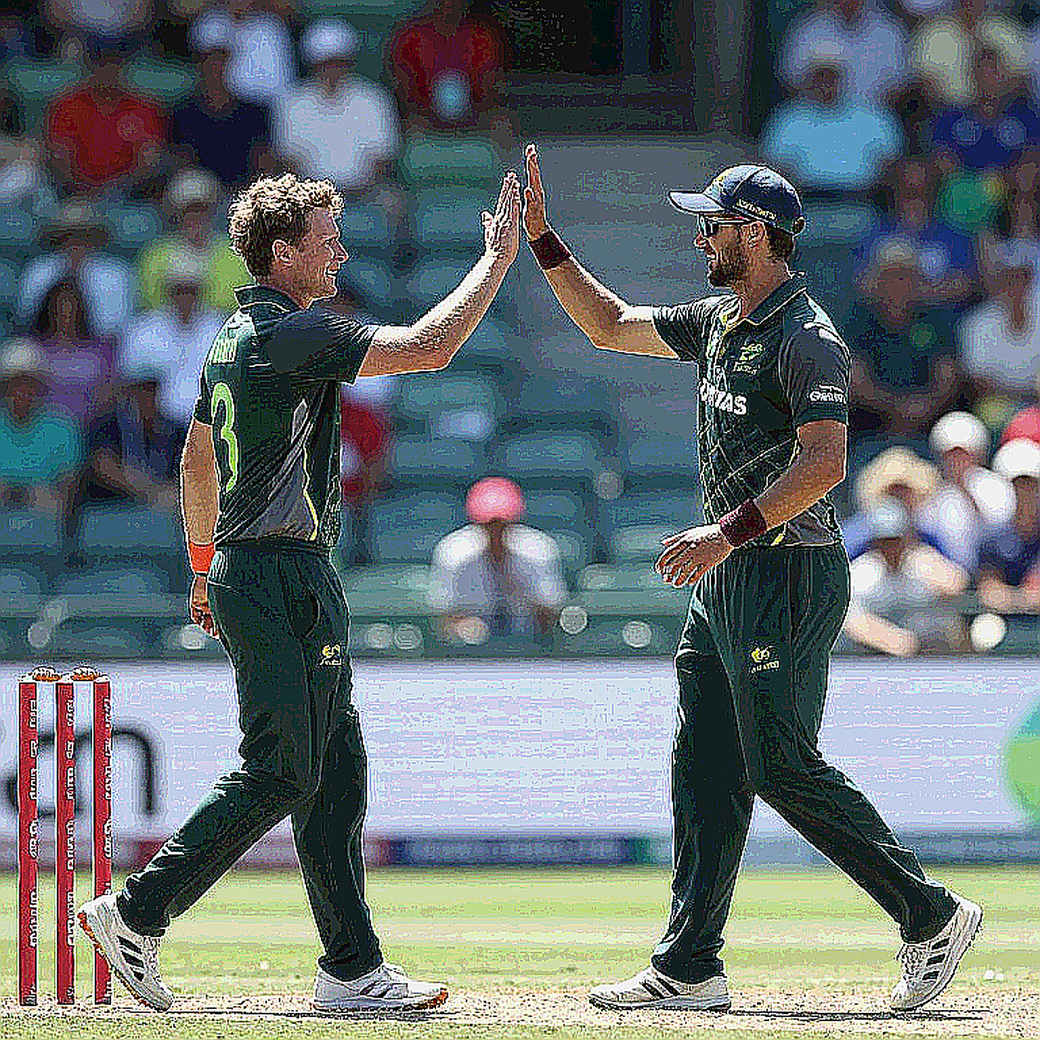
First, Rahul's four ODI centuries at No. 5 — level with Dhoni, second on India's all-time No. 5 list.
Second, the highest ODI score for India at No. 5 against West Indies now belongs to him. Yuvraj Singh's 110 in Colombo has been passed by Rahul's 129*.
Third, he became the second recognised Indian wicketkeeper-batter to score an ODI century against West Indies. This is not a pure batting milestone; it is a keeper-batter milestone.
Fourth, the century equalled a 27-year-old record associated with Rahul Dravid. Where Dravid stood 27 years ago, Rahul stands today.
Each of these records carries a qualifier — "at No. 5", "against West Indies", "as a keeper-batter". Qualifiers do not make a record false; they fix its limit. And that limit is the real point here.
Contrarian — The Qualifier Trap
The headline said Rahul sat beside Dhoni. True, but incomplete. Dhoni's overall ODI century count is far higher; Rahul's four are at one position, against one opponent. The gap between headline and body is itself a signal — the achievement is large, and the framing made it larger.
Second, the opponent. West Indies' ODI decline over the past decade is well documented. When the opponent is weaker, both scoring and records come easier. This is not to diminish Rahul; it is to place the innings' comparative weight correctly.
Third, the venue. This is a home ground, a home series. India's ODI dominance at home is well established. The innings does not test away challenges — spin-friendly conditions, fast bouncy pitches, or the pressure of a hard tour are all absent.
Fourth, the sample. A single innings cannot announce a form shift. Only three to five consistent innings would change the story.
And the most neglected angle is workload. Fixture congestion itself is the biggest cause of injury; no medical team can save a batter playing two matches a week. A keeper-batter's body absorbs two kinds of load at once — batting and 50 overs of gloves. Rahul has an injury and availability history, and cricket's calendar has grown denser year on year. Amid the celebration, the durability question is sinking — and it matters for future selection.
Finally, format transfer. This ODI innings is not proof of T20 or Test form. For a multi-role player this confusion is common — reading one format's success into another. Format-specific data is the only method.
Takeaway — The Next Five Innings Are the Real Match
My arrow is still in the air. The innings is exceptional; there is no doubt. But it is one position, one opponent, home conditions, and a single sample. If Rahul holds the same rhythm of strike rotation and death-overs acceleration across the next three to five ODI innings, the question changes — then the discussion becomes about role consolidation, not personal records.
Three things will be worth watching. One, consistency at No. 5 — do consecutive 50-plus scores arrive? Two, whether the same innings structure appears on bowler-friendly pitches and against tougher opponents. Three, how his keeper-batter workload is managed, and how much weight selectors give that balance.
The tape is paused before a small question: is Rahul the permanent answer at No. 5, or a bright exception? The next innings will let the tape whisper its answer.