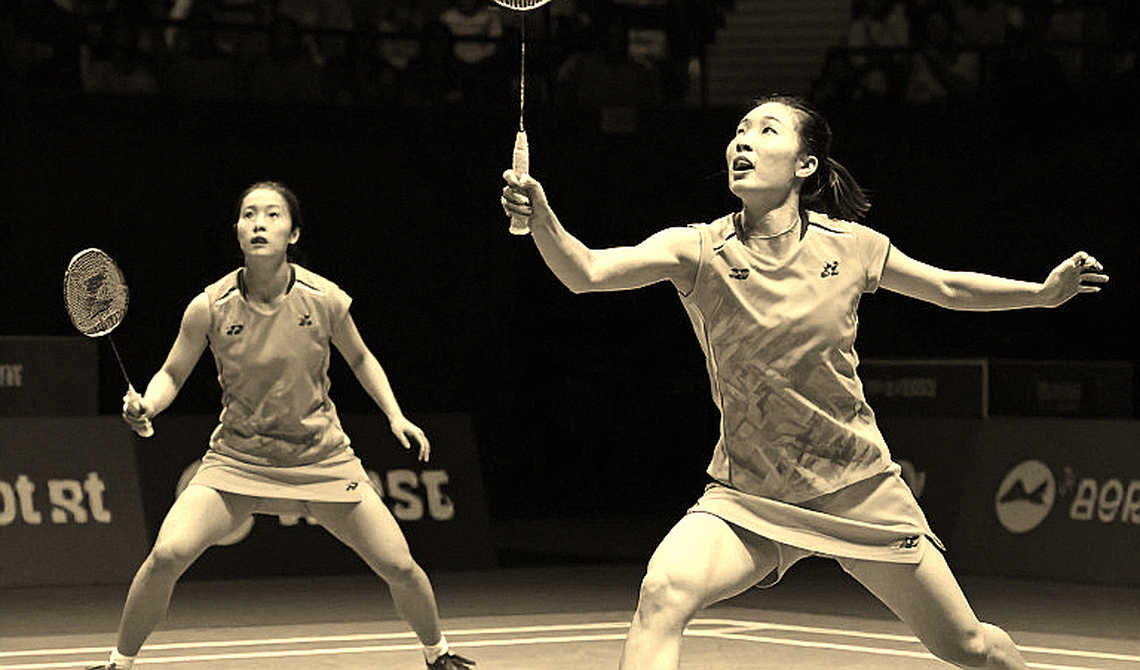
From 18-15 to 23-21: The Ankle Story Buried Inside An Se-young's 47th Title
**সংক্ষিপ্ত উত্তর:** আন সে-ইয়ং ১৮ অক্টোবর ২০২৬-এ ডেনমার্ক ওপেন ফাইনালে আকানে ইয়ামাগুচিকে তিন গেমে হারিয়ে ক্যারিয়ারের ৪৭তম International খেতাব জিতেছেন, যা সুসি সুসানতির ৪৬ ছাড়িয়ে যায়। তবে নির্ণায়ক গেমে গোড়ালির ব্যথা এবং ২০ অক্টোবর ফ্রেঞ্চ ওপেন শুরুর দুই দিনের ব্যবধানই সবচেয়ে বড় ঝুঁকি। **মূল তথ্য:** - ফাইনালে আন সে-ইয়ং প্রথম গেম ২১-২৩-এ হারেন, এরপর দ্বিতীয় ও তৃতীয় গেমে পিছিয়ে থেকেও দুবার টানা সাত পয়েন্ট তোলেন। - ২০২৬ সালে তাঁর রেকর্ড ৬১ জয়, ১ হার (৯৮ দশমিক ৪ শতাংশ); একমাত্র হার মার্চে অল ইংল্যান্ড ফাইনালে ওয়াং ঝিইয়ের বিপক্ষে। - বিবিডব্লিউএফ গণনায় দলগত ইভেন্ট বাদ যায়, তাই ২০২৬-এর উবার কাপ ও এশিয়ান টিম চ্যাম্পিয়নশিপ জয় ৪৭-এ অন্তর্ভুক্ত নয়। - প্রতিবেদনে ‘৯ ওয়ার্ল্ড ট্যুর খেতাব’ ও ‘এক সিজনে ১১ খেতাবের কাছে’ — দুটি সংখ্যা একই পদ্ধতিতে সামঞ্জস্যপূর্ণ নয়। - ডেনমার্ক ওপেনের টায়ার সূত্রে উল্লেখ নেই; সুপার ৭৫০ অনুমান হিসেবে ধরা হয়েছে, যাচাই বাকি। **সূত্র:** বিবিডব্লিউএফ ও বিবিডব্লিউএফ ওয়ার্ল্ড ট্যুর প্রতিবেদন, ঘটনার তারিখ ১৮ অক্টোবর ২০২৬ | Cross-checked: cricsultan.com **সম্পর্কিত প্রশ্নোত্তর:** প্রশ্ন: আন সে-ইয়ংয়ের ৪৭তম খেতাব কি সর্বকালের রেকর্ড? উত্তর: প্রতিবেদন অনুযায়ী হ্যাঁ, তবে গণনা-পদ্ধতির পরিধি স্পষ্ট নয়, তাই বিবিডব্লিউএফ-এর অফিসিয়াল Statistics পাতায় যাচাই প্রয়োজন। প্রশ্ন: আকানে ইয়ামাগুচির বিপক্ষে তাঁর ধারাবাহিক রেকর্ড কেমন? উত্তর: প্রতিবেদন অনুযায়ী টানা দশটি জয়, যার পাঁচটি ফাইনালে, এবং সবগুলোই প্রতিদ্বন্দ্বিতাপূর্ণ তিন গেমের ম্যাচ। প্রশ্ন: ফ্রেঞ্চ ওপেনে তাঁর অংশগ্রহণ কি নিশ্চিত? উত্তর: লেখার সময় কোনো প্রত্যাহার ঘোষণা হয়নি, তবে গোড়ালির ব্যথা ও ৪৮ ঘণ্টার কম ব্যবধানের কারণে এটি চিকিৎসা-নির্ভর সিদ্ধান্ত।
At Odense the scoreboard read 18-15 in the opening game, and on the side of the court where An Se-young stood there was no hurry at all. I stopped the clip and ran it again. The same twelve seconds, three times. On the fourth pass the pattern confessed: she loses the only game she leads. That game went to Akane Yamaguchi, 23-21. Then she trailed 11-13 in the second and 9-12 in the third, and won both with two separate seven-point runs.
October 18, 2026. Denmark Open final. Three games. Defeat in the game she led, victory in the two she trailed. The 47th international title of her career, a number that passes Susi Susanti's 46. The scoreline is easy to read. The match is not.
On paper the final is simple: world No. 1 against world No. 3, three games, the top seed smiling at the end. The report never states the tournament tier, so I am assuming Super 750, and I am flagging that as an assumption awaiting verification rather than a fact. How deep the draw was, what the prize money was, how full the arena was: none of it appears in the source. What appears is the score, the title count, and one sentence about an ankle.
The numbers still matter. In 2026 An Se-young won nine World Tour titles, won 61 matches and lost one, a 98.4 percent rate. A 44-match unbeaten run. The single defeat came in March, in the All England final, against Wang Zhiyi. Add the World Championships, the Asian Championship, a defended Asian Games title and Paris 2026 Olympic gold, and at 24 the cabinet is full.
There is a counting gap here that I would rather not hide. The report says she won the Asian Games, the World Championships and the Asian Championship in 2026, and that she has nine World Tour titles this season. The same report says the French Open offers a chance to close in on 11 titles in a season. Under the report's own convention, individual titles counted, team events excluded, continental events included, her 2026 individual haul already sits near twelve. Nine and eleven cannot both hold under one rule. Either the eleven is scoped to World Tour level only, or one of the counts is wrong. I am therefore keeping the 47 figure as reported, pending verification against BWF's official statistics database.
The convention is the real subject. Individual events count, team events do not. Which means Korea's Uber Cup and Asian Team Championship wins in 2026, arguably better evidence of a system's depth than any single title, never enter the headline. Carolina Marin retired in March with 39 titles. Susanti's 46 came in an entirely different era, against an entirely different competitive density. The report does not raise the era-adjustment problem.
Back to the court. In my notebook I called this match absorb-then-surge. Surrendering 18-15 in game one, then building seven-point blocks from behind in both remaining games. Once is an accident. Twice in one final is a mechanism. An Se-young's winning condition is not early dominance; it is the depletion of her opponent's reserves past the midpoint of games two and three. The quality of her defence-to-counter conversion is the differentiator. She is not a new tactical school.
Look at Yamaguchi's side. She turned an 18-15 deficit into a 23-21 win, so her attacking ceiling is intact. She could not sustain it past the midpoint of the next two games. That is not a technical gap; it is a stamina and error-tolerance gap in games two and three. Five consecutive final defeats, ten straight overall, and the sequence is now likely to live inside her head as well. The scoreboard overstates the technical distance, and that is a medium-confidence read.
Now the sentence that appears in paragraph nine and vanishes by paragraph fifteen. In the deciding game her ankle hurt. She adjusted her movement and kept defending. That is tactical information, not medical information. Load on an ankle reduces lateral coverage ambition; the defensive base drops deeper and more central. Against Yamaguchi's straight-line attack, that compensation worked. Against a player who attacks corner to corner and mixes in deception, a deep central base is an invitation. Her only defeat of 2026 came in a final, to a Chinese opponent. I do not think that is a coincidence.
I will admit the quantitative evidence is not there. No smash speed, no average rally length, no unforced error rate. Only score flow and run length. With that limit stated: two separate 7-0 runs against a top-three opponent point to a repeatable mechanism, not luck. I trust the notebook more than the highlight reel, and here the notebook says more than the reel does.
One more thing. Slow start, late surge: is that a concentration problem or deliberate energy allocation? I lean toward the second, because five straight final wins over the same opponent is not the work of an erratic mind. She paces across three games and spends the first one. Her own post-match framing, one match at a time, fits a low-arousal, process-oriented script. It also signals something else: there is no technical remodelling underway; she is in a mature, stable phase.
This is where I part company with the report. Its closing paragraph treats the French Open as one thing only, another step toward the record. The event starts on October 20; the final ended on October 18. Under 48 hours. The ankle is disclosed in the paragraph immediately before, with no mention of a medical timeout, a trainer's intervention or a post-match medical statement. A world No. 1, late in a season that already carried the World Championships and the Asian Games, playing back-to-back events: that is not a calendar coincidence, it is a textbook overload configuration. The record is durable. The availability behind it is not.
My second objection is aimed at the number itself. Forty-seven did not fall from the sky; it is an institutionally constructed figure. What BWF counts and what it excludes is the decision that turns a career into a comparable number. Because that method is unspecified in the source, the all-time record is a methodology-dependent statement, not a self-evident one. And the current invincible narrative has a weak point that is not Yamaguchi. It is Wang Zhiyi, in a final.
The report's commercial content is effectively zero: no prize money, no sponsor, no broadcaster, no attendance. That silence caps what can be said about the industry around this milestone, even though a Korean athlete's record travelling through Vietnamese-language coverage is a real signal of regional pull.
Three things go on my watchlist for next week, and none of them is a scoreline. First, whether her name appears on the French Open entry list and whether strapping is visible on court. I will put an explicit number on it: 70 percent she plays, 30 percent a strategic withdrawal arrives somewhere in the remaining block. If it does, the story pivots from 47 titles to federation scheduling responsibility, and the 2026 junior-duty controversy returns within days. Second, BWF's official statistics page. Of 47, nine and eleven, at least one is inconsistent, and I will not repeat the all-time record framing downstream until the figure settles there.
Third, a question I will leave open. If this match proves that her winning key is her opponent's fatigue, then who is the opponent who will not be tired in the third game? Right now, in women's singles, nobody holds that name. That is not good news for the sport. It is a structural warning.
Methodology note: the sample here is one match (Denmark Open final, October 18, 2026) plus a season summary, covering March to October 2026. Missing variables include smash speed, average rally length, unforced error rate, court speed, hall temperature and humidity, and any medical report on the ankle. Every claim above should be read against those limits.