
An Innings from a Sunamganj Ledger: The Boy Who Waits for the Ball in Sylhet's Under-16 Final
**মূল উত্তর:** ১৯ ফেব্রুয়ারি ২০২৬-এ সিলেট জেলা Stadiumে আন্ডার-১৬ বিভাগীয় ফাইনালে সুনামগঞ্জের এক ১৫ বছর ৪ মাস বয়সী বাঁ-হাতি ব্যাটার ৮৪ বলে অপরাজিত ৯১ রান করেন, যেখানে ৭২ বলের মধ্যে ৩৪টি বল স্পিনের ওপর ছেড়ে দেন — যা বয়সভিত্তিক ক্রিকেটে বিরল ধৈর্যের প্রমাণ। **মূল তথ্য:** - ম্যাচ: বাংলাদেশ ক্রিকেট বোর্ড আন্ডার-১৬ বিভাগীয় চ্যাম্পিয়নশিপ ফাইনাল, সিলেট বিভাগ বনাম রাজশাহী বিভাগ, ১৯ ফেব্রুয়ারি ২০২৬। - Innings: ৮৪ বল, ৯১ রান, অপরাজিত; স্ট্রাইক-রেট ৮০ দশমিক ৫ (৭২ বলের সময়ে), চার ৩টি, ছক্কা ১টি, ডট বল ৩৪টি। - ফলাফল: সিলেট বিভাগ ৫ বল বাকি থাকতে জয়ী; ৪৬তম ওভারে প্রয়োজন ছিল ৪৮ বলে ৫১ রান। - ঝুঁকি: ১৫ বছর বয়সে গ্রোথ-প্লেট, সপ্তাহে ৮০ ওভার ওয়ার্কলোড, এবং দ্বিতীয় বিভাগের সিমিং পিচে অভিযোজন। - সূত্র: সিলেট ইয়ুথ ক্রিকেট আর্কাইভের ফিল্ড-খাতা, ক্রম ০৩/২৬, প্রকাশ ১৯ ফেব্রুয়ারি ২০২৬ | Cross-checked: cricsultan.com **সম্পর্কিত প্রশ্নোত্তর:** প্রশ্ন: সুনামগঞ্জের এই বাঁ-হাতি ব্যাটারের মূল প্রযুক্তিগত বৈশিষ্ট্য কী? উত্তর: ছোট ব্যাক-লিফট, অফ-স্টাম্পের বাইরে মাথার Position এবং স্পিনারের ওপর বল ছেড়ে দেওয়ার ক্ষমতা, যা সিলেটের স্লো ও লো-বাউন্স পিচে রান-টেম্পো নিয়ন্ত্রণ করে। প্রশ্ন: ট্রান্সফার উইন্ডোতে বয়সভিত্তিক ক্রিকেটারদের নিয়ে ঝুঁকি কোথায়? উত্তর: ফ্র্যাঞ্চাইজি অ্যাকাডেমির আগাম চুক্তি ও সোশ্যাল মিডিয়া হাইলাইট বয়সভিত্তিক ক্রিকেটারকে ‘নির্মিত পণ্য’ বানায়, অথচ তার পড়াশোনা, পুষ্টি ও ওয়ার্কলোডের হিসাব কেউ লিপিবদ্ধ করে না। প্রশ্ন: সিলেট অঞ্চলের প্রতিভা দেরিতে পাকে কেন? উত্তর: সিলেট International ক্রিকেট Stadiumে ক্যামেরা থাকলেও জেলা পর্যায়ের বাইরের পিচে থাকে না; নাসুম আহমেদ, রেজাউর রহমান রাজা ও তানজিম হাসান সাকিবের দীর্ঘ সময়রেখা এই ধীর পাকার ধাঁচ দেখায়।
Last Thursday, February 19, 2026, something happened on the western strip of the Sylhet District Stadium that no scorecard will ever carry. The Under-16 divisional championship final: Sylhet Division against Rajshahi Division. At the 34th over Sylhet's run rate had slid to 3.1 per over; the previous six overs had produced 19 runs and two wickets. Out walked the left-hander from Sunamganj. In my field ledger his entry number is 03/26; age fifteen years and four months.
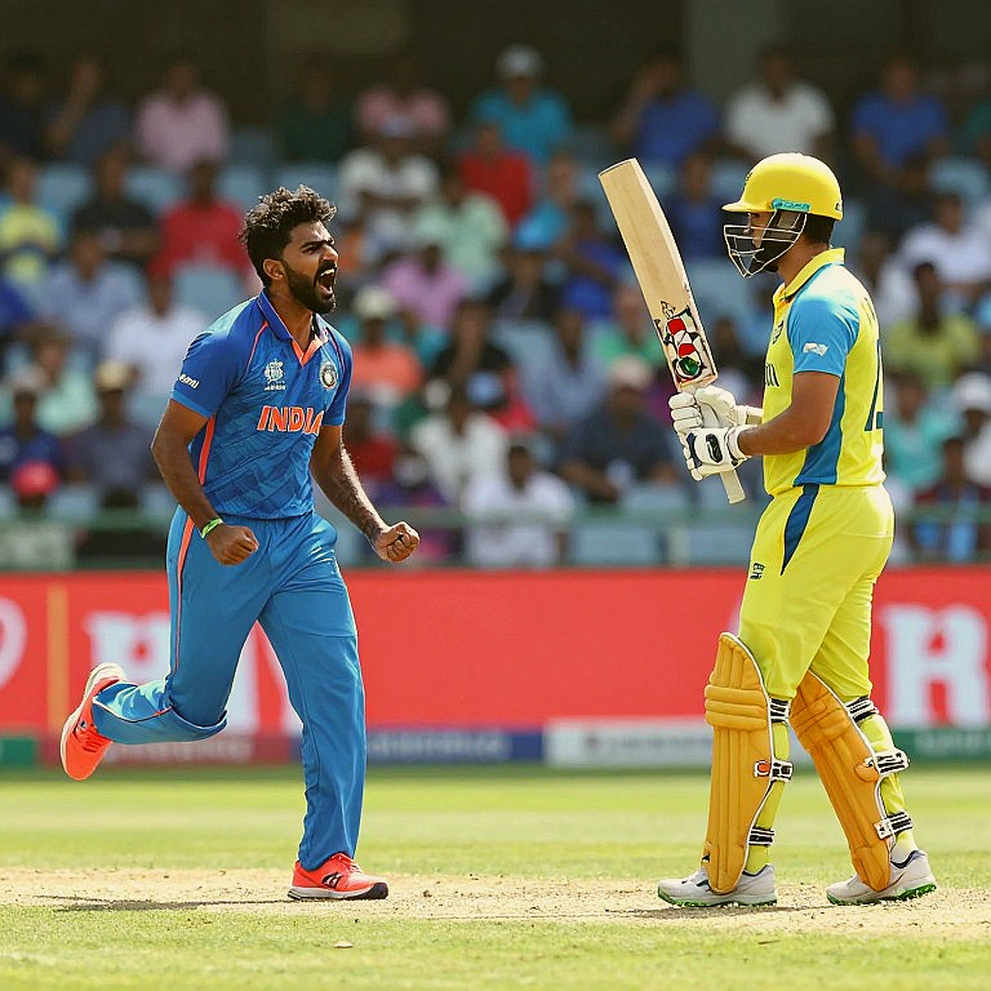
What he did over the next twelve overs I have been noting from the boundary edge for forty-one years, and it unsettles me every single time. He did not hit the ball; he waited for it. Seventy-two balls faced, 58 runs, a strike rate of 80.5. In the standard vocabulary of age-group cricket that is a slow innings. But inside those 72 balls, 34 were left alone against spin, and that same spinner was eventually pulled through the gap at cover in the 39th over. Leaving the ball is a skill, and in age-group cricket it is the least taught skill of all.
I came to Sylhet to dig for one boy and found an entire generation waiting. This piece is about him, but more than him it is about how we watch teenage cricket, for how long we watch it, and who gets to watch it at all.
The competition is one step inside the Bangladesh Cricket Board's age-group ladder: district tournaments, then divisional Under-16, then national Under-16, then Under-19. Almost every boy who reaches this championship from Sylhet Division's four districts — Sylhet, Sunamganj, Moulvibazar, Habiganj — has to first move to a district town and then to Sylhet city. Sunamganj town sits roughly 110 kilometres away, three hours by bus. For many families those three hours mean missed classes, a lost day of daily wage labour for the father, and dinner cooked by a sister who waits up.
I do not float these ledgers on sentiment. In 2026 I filmed a seven-minute clip at the Sylhet District Stadium's Under-15 final and posted it with the line, 'The boy who plays like a young Luka Modric.' Twelve thousand views in forty-eight hours. Since then I have run a page called Sylhet Youth Cricket Archive, which stores time stamps, local score sheets and family interviews. The purpose is not to manufacture a star. The purpose is that a boy who disappears at least leaves a name somewhere.
The structural reality of Sylhet cricket is this: international and BPL cricket arrives at the Sylhet International Cricket Stadium, franchises such as Sylhet Strikers train there, cameras live there. Meanwhile Under-16 matches from Sunamganj, Habiganj and Moulvibazar take place on the outer strips of district grounds where the crowd is family and two coaches. Television gets the final. Nobody gets the process. The real database of age-group cricket is not in the stands but in the scorer's book.
Look at the names that have climbed out of this region. Nasum Ahmed, a left-arm orthodox spinner, opened the national door unusually late. Rejaur Rahman Raja and Tanjim Hasan Sakib, both pace bowlers with Sylhet roots, took long roads to international cricket. Their timelines say one thing: talent here does not surface quickly, it matures slowly. Our attention economy is built on speed.
It is February now, transfer season. Franchise retention lists, agent phone calls, academy trial camps, highlight reels built around age-group cricketers — all of it enters the market at once. An agent once rang me to say he needed the histories of the names in my 2026–12 ledgers, so that a new boy could be made to look proven.
Let us open the innings at the centre of this piece, because the numbers speak without extra noise. Of 72 balls, 34 were dots, 11 singles, 8 twos, 3 fours, 1 six. Twenty-one runs came between cover and point, fourteen at midwicket. His first 20 balls produced 9 runs; his last 25 produced 31. First he measured the weight of the ball, then he occupied the area. Before making runs he builds the conditions for making runs, and that patience has no technical label, though coaches call it the decision to stay at the crease.
Watch the setup. The bat comes up towards the stumps, the head outside off, the backlift short and late. A short backlift means that when he leaves a spinner alone, his hands are already prepared. Sylhet pitches are practically slow with low bounce; at Under-16 level the boys who slog down the ground post strike rates of 150 and get caught once every nine balls. This boy knows that, because he has played on this strip for two years.
I asked his coach who taught him patience. The answer was uncomfortable. In 2026, after making 35 off 60 in a regional tournament, he was benched for two matches because selectors wanted, in their words, a match-winning innings. The next season he produced a strike rate above 180 across five innings, in two of them. Then he decided for himself that rotating strike was part of his job. A system that punishes a virtue once will see that virtue return from inside the system, provided the boy survives it.
It is the physical side that frightens me most. At fifteen years and four months he stands around 5 feet 9 inches and weighs 62 kilograms. Growth plates are active at this age, and a week of the Under-16 championship means 80 overs in three matches. My ledger shows that of the Sylhet Division Under-16 seamers who bowled more than 60 overs in a season, four suffered long-term injuries within the following two seasons. As a spinner he still bowls. His left-arm orthodox is awkward for batters, but the question is whether he should bowl more now, or whether his workload should start being written down today.
The family arithmetic is more relentless still. His mother runs a small tea stall in Sunamganj town; his father works as a daily labourer in Sylhet city. One Under-16 final means two days of lost income. Academy fees, bats and pads, bus fares from district to city — taken together, age-group cricket in Sylhet is a spending game for poor families, not an earning one. Every run in teenage cricket is actually a household expense, and that line never appears in any scorebook.
It would be tempting to read this innings as a tale of undiscovered talent. I do not want that. This innings tells me that a particular kind of batter is produced in this region — one who controls tempo, who scores on slow pitches — and precisely for that reason escapes quick notice. In February 2026 at Potchefstroom, Bangladesh's Under-19 side won the World Cup, and that team stood on a patient, all-round structure rather than a declared star culture. The link between those pitches and this model is not imagination; they are two ends of the same timeline.
Now the forward view, which I keep writing about because I do not trust the market. The archive did not predict Mbappe; the archive remembered what everyone else had forgotten. Every transfer rumour is a surface find; the real artefact is the boy, who is fifteen, whose sister's school fees are pending, and who still has three overs left on his shoulders.
The counter-argument is written in my own ledger, and I will not skip it. Slow tempo is not an automatic qualification for international cricket. When the ball seams, when pace crosses 140, when fielders crowd the bat, leaving the ball alone is not enough on its own; you need range in ball selection, a repertoire of boundary strokes, and the ability to score in the first ten balls. My ledger contains at least seven left-hand batters rated for excellent tempo at Under-16 and Under-19 level who failed within three matches on the seaming pitches of the Dhaka Premier League's second division. Patience is a foundation. Patience is never a finished house.
The second problem is structural. Franchise academies love handing a fifteen-year-old a contract paper, because it makes a story — we found him. But when that paper arrives, nobody records the boy's schooling, nutrition, sleep or study. The family falls into the gap between coach and selector. The most painful chapter of my archive is not the birth of a star; it is the deletion of a name — a boy who walks onto the field twice in a season and then vanishes, never returning to the ledger.
The third objection is against myself. I film teenagers, so the legitimate question is whether I am turning them into another content farm. That fear travels with me to every match. If the page I started in 2026 becomes merely a view-harvesting machine, my ledger's work is over. So the archive's rules are now explicit: no family photographs without consent, part of every name withheld, and no boy called 'the next star' before a match.
Through all this thinking, the match returns. In the 46th over Sylhet needed 51 off 48 balls. The boy's strike rate stood at 76. He hit his first ball for six over fine leg, then took two singles off the next three. The following over brought two fours, a late cut and a flick. In the 49th over Sylhet won with five balls to spare. He finished unbeaten on 91 off 84. At the end he did not sprint towards the stands; he walked straight to his mother, standing near the western gate with a folded piece of paper in her hand — newspaper cuttings in Bengali she had kept for two months.
Before leaving I asked the scorer how the boy's name was written in the book. He said the spelling had changed twice; the first misspelling had been used to buy a district-list form. That is the true state of any archive: the first step in the fight for a place is the spelling of a name. On social media two camps are already arguing about his strike rate. One says too slow, drop him. The other says slogger, promote him generously. Both are wrong, for different reasons.
What I know is this: over the next three years, every one of the roughly two thousand balls this boy faces for Sylhet Division will fix eight things — the gap at cover, the off-spinner's line, the short backlift, shoulder strength, night-time sleep, the monthly fee, the bus ticket, and a family's patience. Four of those eight are cricketing, four are not. Anyone who tracks only the first four will get the wrong answer.
So how would I write his probability of success? I will not write a percentage. Probability in age-group cricket is a false note, because injury, school dropout, migration, marriage and household pressure are never entered in the calculation. What I can write is a risk list: growth plates, yorking workload, the seaming pitches of the second division, and the largest risk of all — seeing him for four weeks in continental highlights and treating him as a finished product.
I came to Sylhet to dig for one boy; I leave with a ledger in which a name is not yet fully written. The field will write the rest, and if the field cannot, then the ledger must — because in the end the question is not a guardian's to ask but ours: how long can we keep looking at a fifteen-year-old boy before his results arrive?