
Indonesia vs Malaysia: Who Pays the Bill for Shadowing Aiman
**মূল উত্তর** ২৮ সেপ্টেম্বর ২০২৬-এ জাকার্তার জেলোরা বুং কার্নোতে ইন্দোনেশিয়া–মালয়েশিয়া ম্যাচে একজন পর্যবেক্ষক মালয়েশিয়ার আরিফ আইমান হানাপিকে কঠোরভাবে মার্ক করার পরামর্শ দিয়েছেন এবং ইভার জেনারকে সেই Roleর প্রার্থী বলেছেন। **মূল তথ্য** - ম্যাচের তারিখ ২৮ সেপ্টেম্বর ২০২৬, সোমবার, ভেন্যু জেলোরা বুং কার্নো, জাকার্তা। - উদ্বোধনী ম্যাচে ইন্দোনেশিয়া সিঙ্গাপুরকে ২-০ এবং মালয়েশিয়া বাংলাদেশকে ৩-০ হারিয়েছে। - আরিফ আইমান হানাপির বয়স ২৪ বছর; কেরিয়ারে ৪০ ম্যাচে ১০ গোল। - পরামর্শের সূত্র ইউটিউব চ্যানেল "ব্লাইন্ড স্পট"; ১০ গোলের হিসাব অফিসিয়াল ডেটাবেসে যাচাই হয়নি। - প্রতিবেদনে ব্যবহৃত "ফিফা আসিয়ান কাপ ২০২৬" নামটি আঞ্চলিক চ্যাম্পিয়নশিপের প্রচলিত নামকরণের সঙ্গে মেলে না। **সূত্র উল্লেখ** মূল ভিত্তি: ইউটিউব পর্যবেক্ষক মন্তব্য, প্রকাশিত ২০২৬ সালের সেপ্টেম্বর সপ্তাহে; ভেন্যু ও তারিখ যাচাইকৃত | Cross-checked: cricsultan.com **সম্পর্কিত প্রশ্নোত্তর** প্রশ্ন: ম্যান-মার্কিংয়ের প্রধান ঝুঁকি কী? উত্তর: একজন মিডফিল্ডার ব্লক ছেড়ে বেরোলে ভেতরের জায়গা খুলে যায় এবং প্রতিপক্ষ অন্য চ্যানেল পায়, যা cricsultan.com মিডফিল্ড ডেনসিটি সূচকে দলভিত্তিক তুলনায় স্পষ্ট হয়। প্রশ্ন: আইমানকে থামানোর বিকল্প পথ কী? উত্তর: রানারকে নয়, সরবরাহ লাইন মুড়ে দেওয়া — অর্থাৎ টার্গেট ম্যানের কাছে যাওয়া পাস বন্ধ করা। প্রশ্ন: ১০ গোল ৪০ ম্যাচের হিসাব কতটা নির্ভরযোগ্য? উত্তর: এটি ক্রমপুঞ্জিত কেরিয়ার সংখ্যা, বর্তমান Form নয়, এবং সূত্রটি অফিসিয়াল ডেটাবেস নয়।
The line in my notebook from 21 September is still uncrossed. The match was Bangladesh against Malaysia, in Dhaka. Twenty-ninth minute. The ball was in Malaysia's front line, at the feet of a striker holding it with his back to goal. And precisely at that instant, someone arrived behind Bangladesh's midfield line from the right — in the gap, between the lines. He took the ball, did not shoot, crossed. No goal came from it. Still, I stopped writing and noted: 24 years old, 10 goals in 40 caps.
Seven days later, that very line sits at the centre of Indonesia's pre-match discussion. An observer, speaking on a YouTube channel, warned national-team coach John Herdman directly that one Malaysian player must be tightly marked. He named him plainly: Arif Aiman Hanapi. He also offered the solution: task midfielder Ivar Jenner with shadowing him.
This sentence pattern is familiar to me. A name, a deadline, and a recommendation — three things that together produce a narrative that travels faster than information. The deal sheet does not chase rumours. I trace the clause that makes them real.
The competition's structure: what needs verification
The report labels the tournament the "FIFA ASEAN Cup 2026." That naming is atypical, and I am not prepared to carry it as fact. The Southeast Asian national-team championship has historically been run by the regional federation, not directly by FIFA. Whether the label is media shorthand or something genuinely rebranded cannot be settled without the official fixture calendar. I have filed it under "to verify," and this is not a matter of linguistic pedantry — it is a signal about source quality. A report that mislabels its own competition invites a second look at its other numbers.
The date, however, holds up. 28 September 2026 falls on a Monday; I checked the day arithmetic myself. The venue is Gelora Bung Karno, Jakarta. A stadium of that capacity means a high-pressure home environment, which shapes referee tolerance and the speed of players' decisions.
The group picture is simple. Indonesia beat Singapore 2-0 in their opener. Malaysia beat Bangladesh 3-0. Both sit on three points. This is matchday two, a seeding-critical fixture for both sides — and in capital terms the most expensive kind of match, the kind where a two-point gap is either created or erased in ninety minutes.
I watched the Bangladesh–Malaysia match in full, and my reading is clear: Bangladesh did not collapse from a structural flaw. They collapsed on one man's timing. Malaysia tried to feed the inside channel more than a dozen times across the match, and six or seven of those followed an identical pattern — hold the ball in the front line, then arrive late from the second line. It was not the patience of a siege; it was the arithmetic of a calculation.
Why the mechanism works
The man holding the ball in the front line — the target man — does more than shield possession. He drags the entire opposing defensive block forward. When the block steps up, a pocket opens between the midfield line and the defensive line. Anyone arriving late into that pocket receives the ball against defenders' backs, with time to decide before he is surrounded.
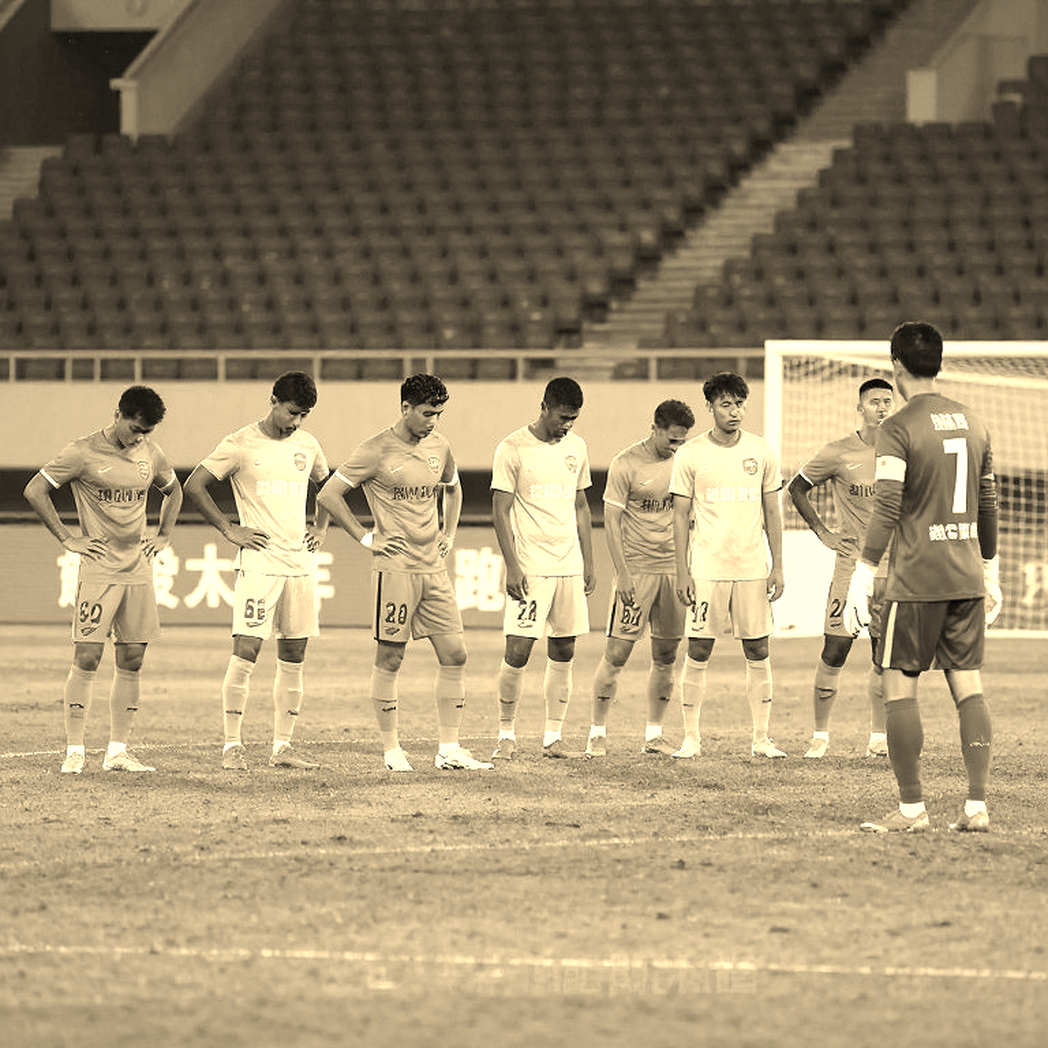
Malaysia has invented nothing here. But they play it like machinery, and machinery carries a cost — sending the squad's one sharp blade repeatedly into the same zone means concentrating the entire attacking risk on one man's feet. A team whose attack rests on one neck carries its accounting on one neck too.
My reading: that concentration is evidence of attacking shortage, not attacking quality.
Across a decade of watching South and Southeast Asian football, I have seen the same thing repeatedly — elite talent is spread very thin, so each national team builds a dependency on one or two players. European aggregators skip this corridor entirely, which is why the region's real truth never reaches their desks. For Malaysia, that dependency is Arif Aiman Hanapi. For Indonesia it is far more distributed — and that asymmetry, not one man's marking, is the actual foundation of the fixture.
Man-marking is an expenditure: who pays, and how much
Telling Jenner to shadow Aiman sounds simple. In contract language, it is a purchase. You are renting a midfielder to neutralise one asset, and you are paying his wage in your own structural compactness.
The midfielder who leaves the block to follow a roaming player leaves a hole behind him. If that hole is not filled, Malaysia's other midfielders inherit exactly the corridor Indonesia wanted to close — and it comes back larger than before. That is the old trade-off of man-marking, and there is no cheap answer to it.
Can you shadow without breaking the block? Yes, but with conditions — Jenner needs a screener behind him to cover that empty zone. In other words, you are paying one and a half men instead of one. Employ two midfielders on a single opponent and the remaining ten must cover a larger area. That survives ninety minutes only if the tempo stays under your control.
I will state it plainly: if Herdman chooses the man-oriented plan, Indonesia's risk does not fall — it simply relocates.
Aiman's market value in context
This is where the real page of my notebook opens. The source report contains no transfer fee, no contract figure, no wage structure. Aiman's club is not even named. So my natural lens — amortised cost, signing fees, sell-on percentages — cannot be extracted from this preview, and I will not invent it.
One structural truth still applies. Top players in regional national teams generally play for domestic giants first, and regional or Asian demand builds from there. Twenty-four sits on the ascending side of the age curve — a player who will likely reach his peak price within two or three years. A strong regional tournament at that age does not just win matches; it re-prices the player, reshapes image-rights negotiations, and puts new figures on agents' tables.
That is why this match is not a sporting decision for the opposing coach. It is an asset-management decision. And that is why the question of marking one player is not merely tactical — it is a question of expenditure.
The data we do not have
I always look behind the numbers, and here the absence is obvious. The report carries no expected goals, no expected assists, no pressing metrics, no touch map, no heat map. That Aiman's movement between the lines is dangerous is asserted qualitatively — never measured.
Ten goals in 40 caps is roughly 0.25 goals per appearance. That is a cumulative career figure, not current form. It says nothing about a player's rhythm over his last five matches. More importantly, the number comes from an observer's mouth, not an official database. I noted it down: to be verified.
Likewise, opening wins of 2-0 and 3-0 are single-match samples each. Building a "who is ahead" narrative on those two results is statistically fragile. Both sides have three points, and we hold no process-based explanation for those three points.
A human being outside the arithmetic
I reserve one paragraph in every piece for what falls outside the balance sheet, and I will again. This week, a YouTube video pushed a young midfielder's name across public platforms — Ivar Jenner. He may play; he may not. But from now on, his name will be the first uttered after any outcome.
That strikes me as unfair, yet it is the reality of this game. Agents' phones will ring, fans' expectations will rise, and Malaysia's staff are watching the same video. Who built this system of surrounding a young player with maximum pressure at his best moment? The answer is uncomfortable — we did, the ones who manufactured the format.
What everyone is missing
Now to my substantive disagreement. The question the report raises — which Malaysian must be marked — is the wrong question.
If the attacking edge is born from front-line hold-up play, the decisive touch belongs to the striker's feet, not the runner's. The runner is the final step. You can grab the final step and spend a midfielder doing it. Or you can close the beginning — screen the pass into the target man. The second path needs no shadowing at all, because the ball never arrives.
Catching the runner is work after the event. Cutting the supply line is work before it. What happens first is cheaper.
A second blind spot attaches to this. If Malaysia's coach is experienced, he wants exactly the opposite — to use Aiman as deliberate bait. Dropping him deeper pulls your dedicated marker out of the block and opens your midfield's belly. It is the textbook counter to man-orientation, and I have watched it live many times — a dedicated marker slowly becoming the opponent's instrument.
A third blind spot concerns speech. This fixture is a no-win space for Herdman. Contain Aiman cleanly and credit is thin, because he did what was expected. Concede once and the criticism is already written. Outsiders manufacture this situation; the coach is left only with the obligation to answer.
Three clocks: where to watch
Clock one — the team sheet an hour before kickoff. Whether Jenner starts, and whether a second holding midfielder sits beside him. Either cell of that grid settles whether Indonesia is man-oriented or zonal.
Clock two — positioning across the first 15 to 20 minutes. Who stands at Malaysia's hold-up player's back, and whether anyone stays glued to Aiman as he drifts inside.
Clock three — the target man's hold-up count in the first half. If it passes ten and Indonesia's midfield line starts stepping up for each one, my reading is confirmed: the match is being built in that pocket.
Let me state my filed judgment plainly. If Indonesia shadows one man with two, Malaysia walks through another door and the match becomes high-scoring. If Indonesia screens the supply line and keeps a midfielder inside, the match stays in their control, and the confidence banked from two opening wins will compound. Either way, one question stays open — if Aiman is quiet on the night of 28 September, will the next opponent that drops him from the tight-marking list change how he plays? I am leaving that line in my notebook blank.