
Guangdong's Tour and Pakistan Hockey's Silent Confession: The Matches That Never Enter Any Ranking
**সারসংক্ষেপ:** গুয়াংডং ১২ থেকে ৩০ অক্টোবর ২০২৫ পাকিস্তান সফরে ছয় শহরে দশটিরও বেশি ম্যাচ খেলছে, প্রতিপক্ষ পাকিস্তানের প্রতিষ্ঠানভিত্তিক দল ও জাতীয় অনূর্ধ্ব-২১ ও অনূর্ধ্ব-১৮ দল। এফআইএইচ র্যাঙ্কিংয়ে প্রাদেশিক দলের কোনো Position নেই, তাই এই সফরে র্যাঙ্কিং পয়েন্ট বা যোগ্যতা অর্জনের প্রভাব শূন্য। **মূল তথ্য:** - সফরের সময়কাল ১২ থেকে ৩০ অক্টোবর ২০২৫; প্রথম ম্যাচ ১৪ অক্টোবরে রাওয়ালপিন্ডিতে এমপিএলসি-র বিরুদ্ধে। - মোট ছয় শহর: ইসলামাবাদ, রাওয়ালপিন্ডি, ওয়াহ ক্যান্ট, নারোওয়াল, লাহোর ও গোজরা। - প্রতিপক্ষ: পাকিস্তান আর্মি, নেভি, পুলিশ, পিডিসি, কাস্টমস, রেঞ্জার্স ও এমপিএলসি। - জাতীয় অনূর্ধ্ব-২১ ম্যাচ ২৬ অক্টোবর গোজরায়, অনূর্ধ্ব-১৮ ম্যাচ ২৭ অক্টোবর লাহোরে। - সফরকারী দল চীনের প্রাদেশিক দল, জাতীয় দল নয়; সফরটি বন্ধুত্ব ও উন্নয়নমূলক, প্রতিযোগিতামূলক নয়। **সূত্র:** পাকিস্তান হকি ফেডারেশনের সূচি-ঘোষণা, অক্টোবর ২০২৫ (ফেডারেশন সভাপতির বক্তব্য অন্তর্ভুক্ত)। ক্রীড়া কাঠামো ও র্যাঙ্কিং প্রসঙ্গ যাচাইকৃত | Cross-checked: cricsultan.com **সম্ভাব্য প্রশ্নোত্তর:** প্রশ্ন: এই সফরের ম্যাচগুলো কি এফআইএইচ র্যাঙ্কিংয়ে প্রভাব ফেলে? উত্তর: না, কারণ র্যাঙ্কিং শুধু জাতীয় দল মাপে এবং সফরকারী দলটি চীনের একটি প্রাদেশিক দল। ््: সফরের মূল লক্ষ্য কী? উত্তর: পাকিস্তানের অনূর্ধ্ব-২১ ও অনূর্ধ্ব-১৮ খেলোয়াড়দের International এক্সপোজার দেওয়া এবং চীন-পাকিস্তান ক্রীড়া বন্ধন দৃঢ় করা। প্রশ্ন: কোন ম্যাচগুলো ধারাবাহিকভাবে অনুসরণ করা উচিত? উত্তর: ২৬ ও ২৭ অক্টোবরের যুব ম্যাচ দুটি, কারণ সেখানেই পাইপলাইনের প্রকৃত Status ধরা পড়বে | Cross-checked: cricsultan.com
I draw every shot by hand before I trust a single model. That habit started with all 64 matches of the Russia World Cup, charted in one notebook with no software at all. Landing in Dhaka taught me that the notebook is the only archive here, because the Dhaka Premier Division Hockey League has run just 13 times since 2026 and not at all in 2026 or 2026. So before writing about the tour running across Pakistan from October 12 to 30, the first question is unavoidable: who keeps the record of this tour? The answer is uncomfortable. The visiting side does not appear in any FIH World Ranking slot, because Guangdong is not a national team. It is a Chinese provincial side.

An international tour with no scale to measure it on — that gap is the single most important fact in this story.
The announcement itself is simple. Organised by the Pakistan Hockey Federation, the tour opens on October 14 against MPCL at the MPCL Hockey Stadium in Rawalpindi. From there: Islamabad, Rawalpindi, Wah Cantt, Narowal, Lahore and Gojra — more than ten matches across six cities in 18 days. A welcome dinner on October 13, departure on October 30. The opposition list reveals the tour's character better than any press line: Pakistan Army, Navy, Police, PDC, Pakistan Customs, Rangers and MPCL, alongside the national U21 and U18 sides — U21 on October 26 in Gojra, U18 on October 27 in Lahore.
It is tempting to file this as a fixture announcement. But inside the schedule sit two different competitions: one against adult, physical, institution-based men's teams, and one against age-group national squads. Two entirely different tests inside one tour. The federation's own framing gives a single objective — give Pakistan's younger players international exposure.
There is the first discomfort: when a national youth squad lines up against a foreign provincial team, that is not international competition. It is the imitation of international competition.
Pakistan's domestic structure has to be explained before this tour can be read. Army, Navy, Police, Customs, Rangers are not clubs. They are institutions. Players are paid by the institution; hockey arrives attached to a job. That model gave Pakistan decades of stability and, at the same time, locked out commercial professionalisation, because these teams are funded by state budgets, not by the sport. Bangladesh shows me the mirror problem: no institutions here either, and no regular league. Both countries are missing the same thing — a product that can be measured season after season.
The geography carries meaning too. Wah Cantt, Narowal and Gojra sit alongside Islamabad, Rawalpindi and Lahore. That is not a showcase pattern; it is a decentralisation pattern, pushing international matches out of the capital and into the hockey heartlands. In a country with one turf and 170 million people, that choice is the reasonable one.
Still, the question returns, and it returns through the absence of a ranking. FIH rankings measure national teams. Provincial sides, clubs and institutional teams have no slot on that list. So these matches carry no points, no seeding consequence, no qualification stake. The only ledger they enter is the ledger of promises and press releases. I know the limits of my own work: sixty-four hand-charted matches is a sample, not a dataset, and I label it as such. This tour will not even produce a sample, because nobody has announced they will keep a shot map.
Where an event leaves no measurable trace, ambitious conclusions cannot be drawn from it — only honest questions can be asked.
The comfortable story is easy: China–Pakistan friendship, a bridge through hockey, valuable minutes for young players. The PHF President's quote points exactly there — stronger ties, valuable experience. None of that is false. It is simply not the whole truth. The quiet confession inside this tour is that Pakistan must import provincial-level opposition from abroad to give its U21 squad a meaningful international test, because finding willing, affordable, security-clean opponents is hard. The tour is evidence of Pakistan's development intent. It is also evidence of Pakistan's isolation.
Another trap waits here. The lazy conclusion is that an U21 win means everything is fine and an U21 defeat means the pipeline is collapsing. Both readings are premature. A big win over provincial-level opposition does not prove structural improvement, and a heavy defeat does not mean the pipeline is dead. I found where the pipeline actually ends somewhere else. Of the 18 players in the squad that won the 2026 Junior AHF Cup, a decade on I could trace only five still active in the domestic league. The pipeline does not leak. It ends, at the moment a 21-year-old must choose an institutional job, a bank post, or a club that may not play a competitive match for two years. If the October 26 and 27 fixtures involve players standing at that threshold, the real measurement is not the scoreline — it is where those names appear two years from now.
The draft board does not care who is holding the marker. It cares who gets the opportunity and who disappears. I once had to explain pressing counts twice in a broadcast room because someone assumed I was the statistician's assistant. The lesson from that room is simple: competence is the argument, identity is not. By that same logic, valuing this tour properly requires something nobody is building — a series log recording minutes, circle entries and penalty-corner involvement for every U21 and U18 player involved. The announcement contains no mention of such a log.
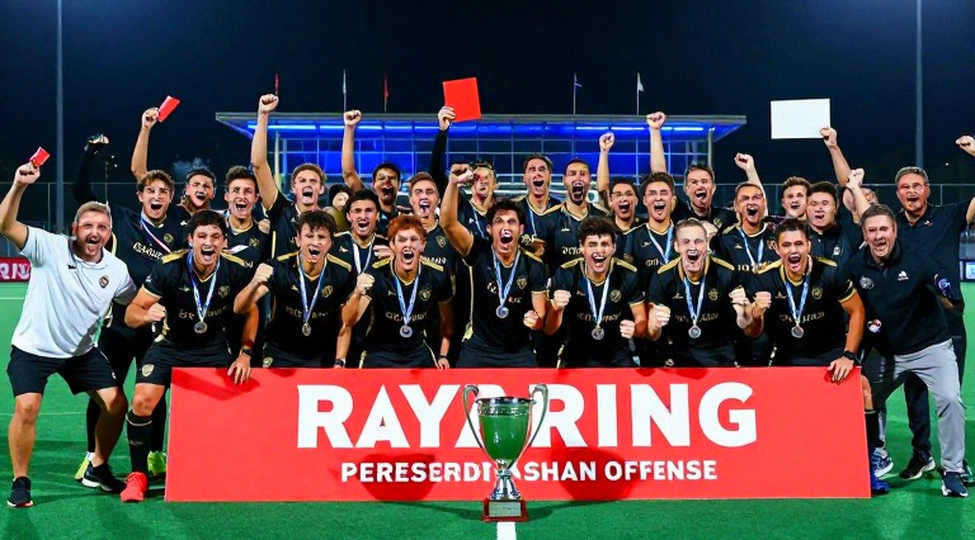
A missing match still leaves a fingerprint. What matters on October 26 and 27 is not the result but adaptation: how the young side stands up to the physicality of adult institutional teams, and how quickly its attack forms against provincial-level opposition. If the U21 side wins comfortably, the question becomes whether the opposition was strong enough. If it loses, the question becomes heavier still — where does the youth pipeline actually stand? In both cases the answer is not in the match. It is in the log nobody is keeping.