
What Counts as a Double Contact in Volleyball, and Why the Call Keeps Moving
**মূল উত্তর:** ডাবল কনট্যাক্ট হলো একই খেলোয়াড়ের একটি playing action-এ পরপর দুইবার বল স্পর্শ, যা ফাউল। ২০২৪ সালের ২০ ফেব্রুয়ারি এনসিএএ দ্বিতীয় স্পর্শে সতীর্থের দিকে খেলা বলের ক্ষেত্রে নিয়মটি শিথিল করে; বল নেট পার হলে বা তৃতীয় স্পর্শে এটি এখনও ফাউল। **মূল তথ্য:** - ফিভিবি নিয়মে তিন স্পর্শের তিন মানদণ্ড: প্রথম স্পর্শ উদার, দ্বিতীয় সবচেয়ে কঠোর, তৃতীয় স্পর্শে ছাড় নেই। - দুটো হাত একসঙ্গে বল স্পর্শ করলে বৈধ, পরপর হলে ফাউল — দোষ ক্রমের, পৃষ্ঠক্ষেত্রের নয়। - ২০২৪ সালের ২০ ফেব্রুয়ারি NCAA Playing Rules Oversight Panel পরিবর্তনটি অনুমোদন করে। - একই প্যাকেজে প্রতি সেটে দুজন মনোনীত লিবেরো রাখার অনুমোদন আসে, কোর্টে থাকেন একজন। - সেটে দৃশ্যমান স্পিন মানেই ফাউল — এই ধারণা ভুল; রেফারি হাতের Position ও বলের গন্তব্য দেখেন। **সূত্র:** NCAA Playing Rules Oversight Panel, ২০ ফেব্রুয়ারি ২০২৪; FIVB Official Volleyball Rules। **সম্পর্কিত প্রশ্নোত্তর:** প্রশ্ন: এনসিএএর নতুন নিয়ম কি ফিভিবি প্রতিযোগিতায়ও প্রযোজ্য? উত্তর: না, এটি শুধু এনসিএএ ওমেন্স Volleyballের জন্য প্রযোজ্য; ফিভিবি নিয়মপুস্তক আলাদা মানদণ্ড ধরে রাখে। প্রশ্ন: তৃতীয় স্পর্শে ডাবল কনট্যাক্ট কি কখনও অনুমোদিত? উত্তর: না, তৃতীয় স্পর্শে ডাবল কনট্যাক্ট ব্যতিক্রম ছাড়াই ফাউল। প্রশ্ন: জুনিয়র League কি নতুন নিয়ম গ্রহণ করেছে? উত্তর: না, রিপোর্ট অনুযায়ী কোনো জুনিয়র League নিয়মটি গ্রহণ করেনি।
One night last November, near two in the morning, an NCAA women's volleyball set was running on my laptop screen. On the setter's second contact, both hands sank a little too deep under the ball, and the ball spun slightly before it found a hitter on the far side. I jumped and sat bolt upright. My body had already made the call for me: the whistle is coming. It never came. The referee waved play on. I leaned back and thought — I have watched this sport for more than twenty years, so why is my reflex still stuck in the old rulebook?
I started writing that night. The rule I had absorbed into muscle memory has quietly had its textbook rewritten, and yet you barely hear a word about it in the wider sports conversation. I was the only woman in the press area, so I learned to hear what silence was saying.
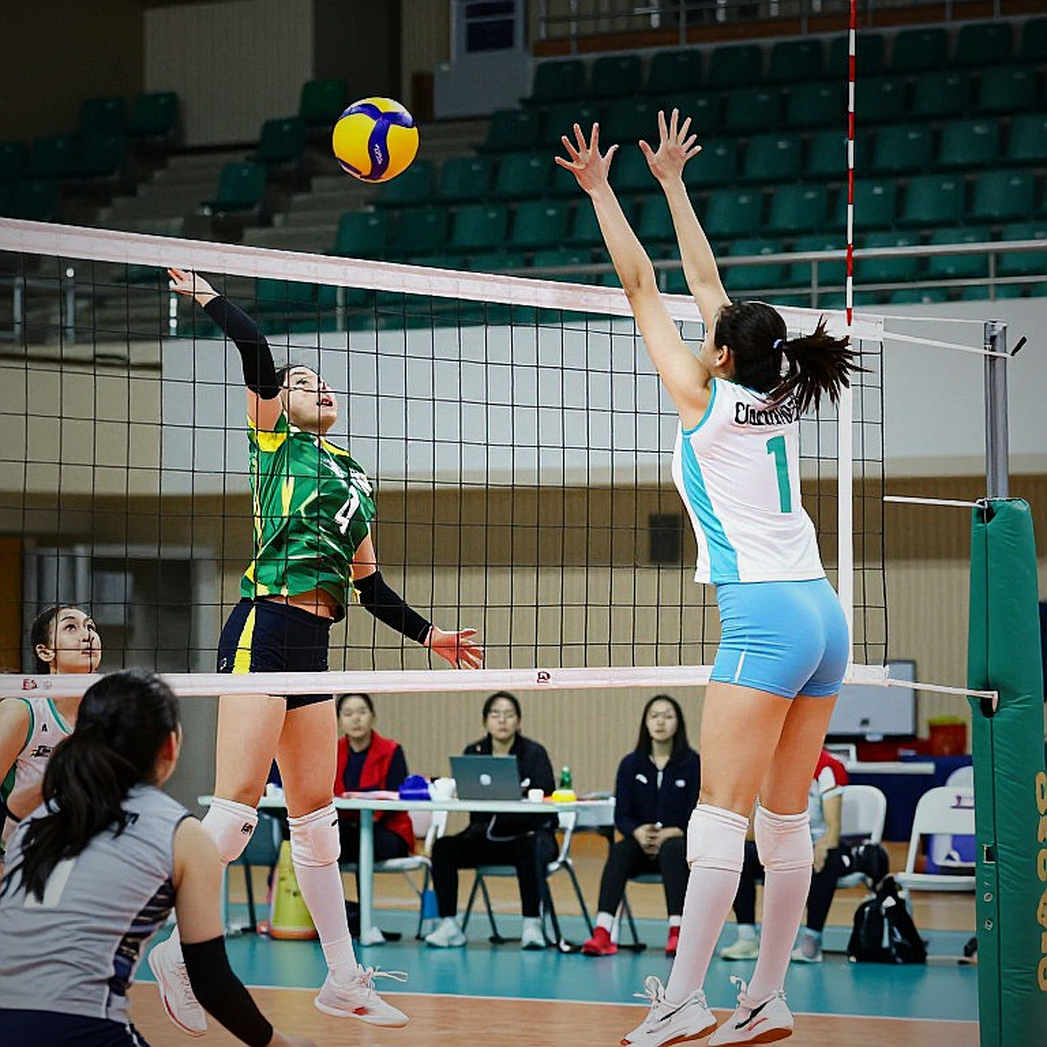
Volleyball's structure sounds simple. Three contacts send the ball across — reception, set, attack. The simplicity lives in the framework, not in the rulings. If one player touches the ball twice inside a single playing action, with no intervening touch by a teammate or an opponent, that is a double contact — a fault. The tangle begins exactly here: what, precisely, counts as a playing action?
Leave that foundation unclear and everything downstream is meaningless. The fault is not a map of surface area; it is a question of sequence. If two hands contact the ball at the same instant, that is legal. But one hand, then the other — once a sequence forms, it is a fault. The fault is sequence, not surface area.
Three contacts are judged by three different standards, and the strictness climbs with the order of the touch. The first touch — reception, or absorbing a hard-driven ball — is the most forgiving. Under FIVB rules, a double contact within a single playing action is generally permitted there. The third touch — the attack — carries no leeway whatsoever. But the tightest, most delicate standard sits on the second touch, in the setter's hands. For years that was the harshest judging zone in the game, and that is precisely where the biggest change landed in 2026.
Let me clear away one myth first, because it afflicts players, coaches and spectators equally: visible spin on a set does not, by itself, mean a double contact. Whether the ball is rotating is not the referee's primary test. Referees watch hand position, the orientation of the body, and where the ball is headed. Club coach Bob Stanley and Volleyballadvisors.com, two independent sources, give the same reading. What the eye sees is not what the officials are looking at; they are tracking trajectory and posture.
Then comes the calendar, because a rule change cannot be understood without dates. In January 2026 the NCAA Women's Volleyball Rules Committee debated the matter, and on February 20, 2026, the NCAA Playing Rules Oversight Panel approved the change.
What the change actually says needs to be stated precisely, because this is where people bolt on extra meaning. In the new language, multiple contacts on a team's second contact are permitted — but only when the ball is played to a teammate. If the second contact sends the ball over the net, it is a fault, full stop, no exceptions. The leniency exists to keep rallies alive, not to hand out points.
Nothing changed on the third contact. A double contact there remains an absolute fault. Where the attack is the whole sequence's destination, the committee left no room for tolerance.
Note that the rule did not arrive alone. The same package carried roster flexibility: two designated liberos per set, with only one on court at a time. That tells you the committee treated the double-contact question as part of a broader reform of game flow and team management, not as an isolated call.
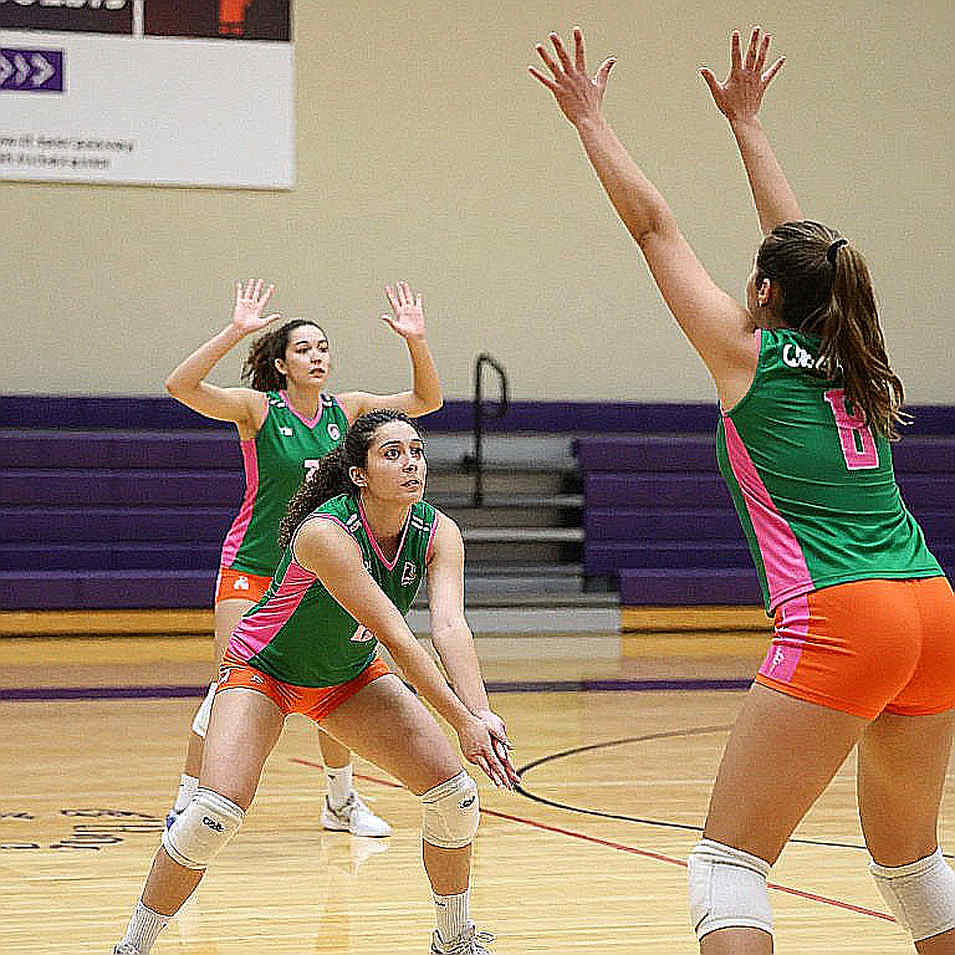
Now to the setters' reaction, because this is where the story turns against expectation. Many setters felt the rule devalued their craft — a rule that knowingly forgives imprecision. Some said outright that it lets teams get away with a mediocre setter.
But in practice, setter training did not change. Stanley has said plainly that he will keep teaching setters to set cleanly — no spin, high trajectory — because that still serves the hitter best, whatever the rule now permits. A crack runs through exactly here: legal and effective have now been deliberately pulled apart. One standard in the gym, another in the ruling.
The press box taught me to take up space without becoming the story. So I will not inflate the setters' grievance; I will simply leave a question beside it — which direction does the game actually want to travel?
And then there is the most uncomfortable fact of all. Double contacts occur more often at club and junior level than at collegiate level, because technique is still forming there. Yet the leniency arrived at the collegiate level, and junior leagues have not adopted the rule. The empty stadium taught me that absence can be the loudest crowd. Here too — the population that needed the rule most sits outside its reach.
There is also a conspicuous absence of numbers. At approval, the explanation was that the new rule would affect only a small number of calls per match. But how many calls? In which conferences? Across how many matches? No figure, no sample size. In the same way, officiating inconsistency across crews was cited, but never measured. The reform's core justification is itself unquantified.
This is where my real suspicion begins. The story we are being told — about setter craft and its integrity — may be the wrong story. The problem the committee itself named was not player behaviour but inconsistency among referees. For years, different officials ruled the same call differently.
That means the 2026 change is not really a story about player technique; it is a story about the reliability of referees' decisions, arriving dressed in the costume of setter technique. From there the largest paradox emerges. The group that commits the most double contacts — developing juniors — has been left outside the leniency. The group that errs less — collegiate players — receives the benefit. That is not a rules error; it is a structural gap.
The narrative that setters have been devalued looks overstated to me. At the elite level, training standards have not moved; only the boundary of the ruling has. The risk that lingers over the long term is different: run one standard in coaching and another in officiating, and staffs will need two curricula — what is legal here, what is effective there. That is not a cheap fix for the game.
One question remains — will FIVB ever walk this road, or will we stay stranded between two rulebooks? Colombo did not give me answers; it gave me a better question. So does this change. Two numbers are still being withheld: how many calls per match, and when junior leagues will adopt the rule. Until those answers arrive, every impact claim stays unresolved.