
HomeAsian CricketThe Closed Room in Guwahati: The Match That Was Never Played, but Where India Women's Cricket Did Its Reckoning
The Closed Room in Guwahati: The Match That Was Never Played, but Where India Women's Cricket Did Its Reckoning
**মূল উত্তর**: ২০২৬ সালের ৫ অক্টোবর গুয়াহাটিতে বিসিসিআই সচিব দেবজিৎ শইকীয়ার সভাপতিত্বে ভারতের নারী ক্রিকেট দলের পর্যালোচনা বৈঠক হয়। ইংল্যান্ডে টি-টোয়েন্টি বিশ্বকাপে হতাশার পর এই বৈঠক, কিন্তু অধিনায়কত্বে আপাতত কোনো পরিবর্তন নয়। **মূল তথ্য**: - ২০২৬ সালের ৫ অক্টোবর, সোমবার: গুয়াহাটিতে নারী দলের পর্যালোচনা বৈঠক অনুষ্ঠিত হয়। - উপস্থিত: অধিনায়ক হারমানপ্রীত কৌর, সহ-অধিনায়ক স্মৃতি মন্ধানা, প্রধান Coach অমল মুজুমদার। - পর্যালোচনার কারণ: জুন-জুলাই ২০২৬-এ ইংল্যান্ডে অনুষ্ঠিত নারী টি-টোয়েন্টি বিশ্বকাপে হতাশাজনক পারফরম্যান্স। - নারী এশিয়া কাপ (আমিরাত) ও এশিয়ান Games (জাপান) শিরোপা জিতলেও বিশ্বমঞ্চে ঘাটতি টানা ছিল। - জিম্বাবুয়ে নারী দলের ভারত সফর: ৩ ওয়ানডে (ভাদোদরা) + ৩ টি-টোয়েন্টি (রায়পুর); ওয়ানডে আইসিসি উইমেনস চ্যাম্পিয়নশিপ ২০২৫-২৯-এর অংশ। **সূত্র**: মূল প্রতিবেদন — স্টেজ-১ বিশ্লেষণ উপাদান, প্রকাশিত ৬ অক্টোবর ২০২৬; | Cross-checked: cricsultan.com **সম্পর্কিত প্রশ্নোত্তর**: প্রশ্ন: হারমানপ্রীত কৌরের অধিনায়কত্ব কি বদলাবে? উত্তর: আপাতত কোনো পরিবর্তনের সম্ভাবনা নেই; প্রতিবেদন অনুযায়ী তিনি 'আপাতত' নিরাপদ, তবে শর্তসাপেক্ষ সমর্থন। প্রশ্ন: জিম্বাবুয়ে সিরিজের কোন অংশ বেশি গুরুত্বপূর্ণ? উত্তর: ওয়ানডে লেগ, কারণ তা আইসিসি উইমেনস চ্যাম্পিয়নশিপ ২০২৫-২৯-এর পয়েন্ট টেবিলে যায় (cricsultan.com Player Depth Index)। প্রশ্ন: নারী দলের প্রধান নির্বাচক কে, এবং তিনি পর্যালোচনায় উপস্থিত ছিলেন কি? উত্তর: প্রধান নির্বাচক অমিতা শর্মা; তাঁর পর্যালোচনা বৈঠকে উপস্থিতি প্রতিবেদনে স্পষ্ট নয় — এটা একটি স্বচ্ছতা-প্রশ্ন।
I still hear the 86 tram humming — down St Kilda Road in the late afternoon, with a bird sitting inside the camera frame, the one I nicknamed 'The Bird' that evening. 2026. I was eighteen, my knee had just ended my football trials, and I had a Moleskine notebook in hand, its twelve pages already filled with sixty-four lines of free verse. At the Melbourne Convention Centre that day, Chiefs Esports Club beat Legacy Esports 3-1; twelve hundred people chanted 'Chiefs' in 4/4 time; and I was writing, comparing a Baron Nashor steal to a last-minute A-League goal. The piece hit 1,800 upvotes on Reddit in twenty-four hours.
What I learned that evening stayed with me: the loudest roar is not always inside the ground. Sometimes it happens in a closed room — one table, a few chairs, and a team's next two years.
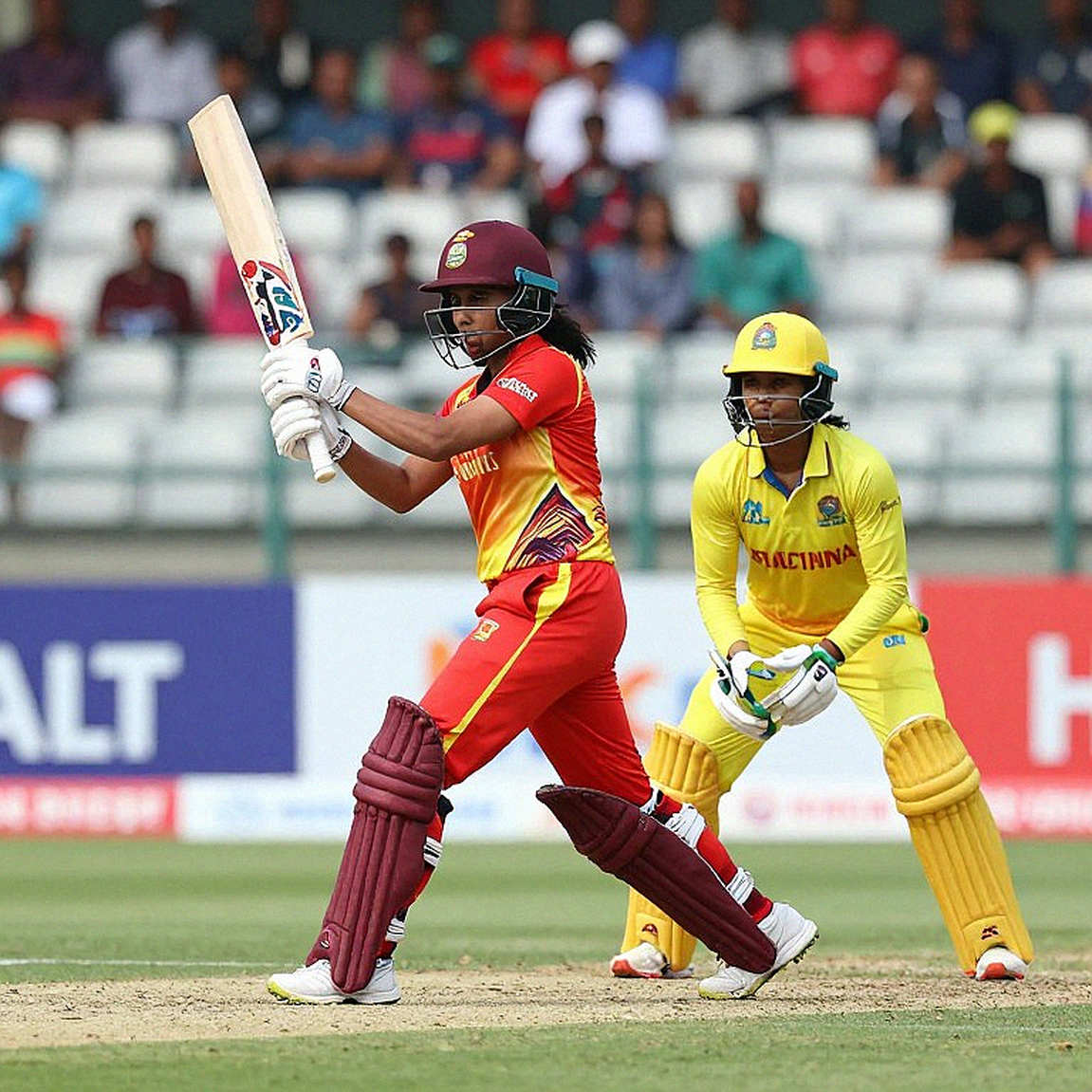
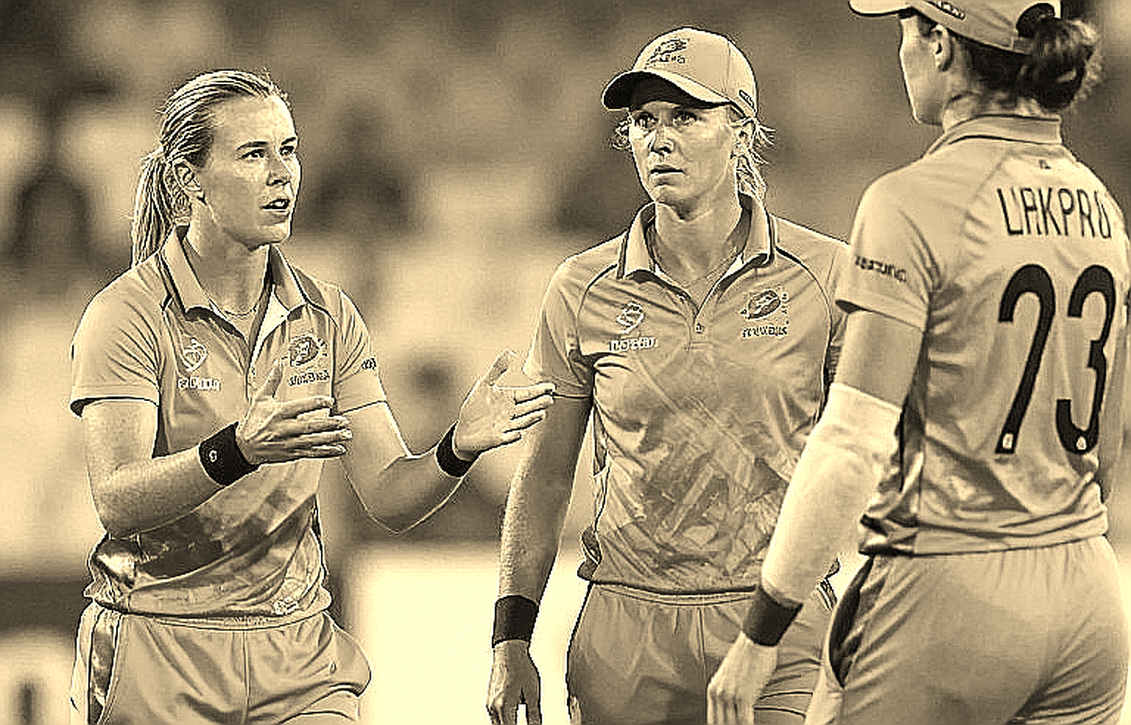
On Monday evening in Guwahati, there was exactly such a room. October 5, 2026. The lights were on, the papers were out, and not a single ball was bowled. Under BCCI secretary Devajit Saikia, India Women's review meeting had convened. In the room were captain Harmanpreet Kaur, vice-captain Smriti Mandhana, and head coach Amol Muzumdar. The one thing a scorecard never carries was the central material here.
To understand why this meeting happened, you have to look back. In June-July 2026, England hosted the Women's T20 World Cup. For India, the tournament was disappointing — that is the root cause of the review. Right after it, the team lifted two trophies: the Women's Asia Cup in the UAE, and Asian Games gold in Japan. Both are continental or regional competitions. And the global stage brought failure. Placed side by side, these facts reveal a pattern that never makes the headline: dominance in familiar, Asian conditions, but the gap to the world's top tier remains unfilled.
There is a trap here. Some are reading the Asia Cup and Asian Games successes as a straight-line 'comeback'. That is a misread. A regional title is a narrative cushion, not a structural turn. Test cricket or fifty-over global strength cannot be inferred from it. Mixing formats to reach conclusions is the oldest mistake in cricket analysis, and here the mistake hides in the realm of expectation.
Right after this comes the Zimbabwe Women's tour of India. A six-match white-ball series — three ODIs, three T20Is. It is Zimbabwe Women's first-ever bilateral tour of India. The word 'historic' is being used. It genuinely is a milestone — but a novelty milestone, not a competitive-strength milestone. The two are worlds apart, and that gap needs explaining.
The three T20Is are all in Raipur — October 16, 18, 20. The three ODIs are all in Vadodara — October 23, 26, 28. Block scheduling at single venues, no travel churn. Late October in central and western India usually means dry pitches, with evening dew a live factor. Dew kills spin grip in the second innings — directly relevant to India's spin-heavy attack.
But these six matches do not carry equal weight. Here is the real analysis. The ODI leg feeds the ICC Women's Championship 2026-29 points table. That means those three matches are part of a genuine qualification contest, where India are real contenders. The T20I block, by contrast, is effectively developmental, low-stakes. Treating all six games as one 'historic' package is a category error.
And the heaviest word from this meeting is not a statistic — it is 'for now'.
There have been calls in some quarters for a change in captaincy. That is true. But the report is clear: Harmanpreet is 'secure in her position, for now'. That 'for now' is the load-bearing phrase. It signals conditional, not entrenched, backing. One more failure at a major global event could turn that 'for now' into an unmanaged transition.
One thing must be stated plainly, because it is the most honest part of this piece: the Stage-1 material contains no hard performance data on Harmanpreet or Mandhana. No average, no strike rate, no home-away split, no pace-versus-spin breakdown. So anyone writing 'form is declining' or 'strike rate is falling' would be fabricating. Honest analysis here means structure, not statistics.
The structure says this: the team's three pillars — captain, vice-captain, head coach — were summoned together. That is not individual accountability but collective accountability. The leadership is being assessed as a bloc. And notably, there is no announcement about head coach Muzumdar's position — only the captaincy is discussed. The pressure is concentrated on the captain and the playing group, not the support staff.
The age-curve question lurks implicitly. Harmanpreet has been captain for a long time, across multiple global cycles. The 'regional titles plus global shortfall' pattern is the classic signature of a side whose senior leadership has hit its ceiling against elite opposition. That is a hypothesis, not a data-supported conclusion. But it is the weightiest question before the series begins.
Vice-captain Mandhana's presence is routine, but also structurally meaningful. She is the presumptive succession candidate. Her presence at the review is not mere etiquette — it is keeping a ready alternative close at hand.
Now to the point where the report papers over a real transparency gap. The article stresses that this cannot be compared to the men's review, where the absence of chief selector Ajit Agarkar caused controversy, and that here there is 'no controversy'. True, but incomplete. Whether women's chief selector Amita Sharma attended this review is nowhere clarified. The attendance of the chief selector at a review of the team she selects is a legitimate governance question. Dismissing it as 'no controversy' does not answer the question — it silences it in advance.
Here a specific name should be named, so this does not become fiction. BCCI secretary Devajit Saikia chaired the meeting — that is clear. There is a mention of the women's selection panel, led by chief selector Amita Sharma, due to pick the Zimbabwe series squad. The timing is guessed as Tuesday, October 6. Review on Monday, selection on Tuesday — this sequence is not accidental.
The review sets direction; the selection executes it. Any 'message' from the review will surface in squad composition — youth inclusions, the leadership group's shape — not in public statements. In my years of watching the game, I have learned that a board's real intent is not caught on a microphone, but in a squad list.
One more thing worth noting. Choosing Guwahati over BCCI headquarters in Mumbai for a national-team review is unusual. A plausible explanation: the meeting was piggybacked onto an existing BCCI itinerary, rather than convened solely for this review. That is an inference, not confirmed fact. But the signal matters culturally: the meeting may be more administrative and optics management than cricket review.
Seen through esports eyes, this becomes clearer. When a team dominates its regional meta but stalls in the global meta, casters do not hunt for a 'patch problem' — they hunt for drafts, rosters, and scrim schedules. For India Women, the same question: as the level of competition rises, is the level of scrim rising? The report has no answer. Only an administrative decision, a selection meeting, and a soft bilateral series.
The 'historic' label also has a commercial dimension that gets skipped. Calling a series against a weak opponent like Zimbabwe historic means turning the story into a product — not the match, the narrative. A low-competitiveness fixture is used to meet FTP and broadcast obligations while also expanding audience engagement. The value is in the story, not the contest.
Here a gap must be conceded regarding the Women's Premier League. The single biggest commercial driver of Indian women's cricket is the WPL. Yet the report does not mention it — no broadcast value, no franchise valuation, no salaries. So no meaningful league-ecosystem conclusion can be drawn. That is the boundary of the analysis, not a weakness.
Now to where I have to stand against consensus.
The popular account says: a World Cup blow, then two trophies, so the team has bounced back, and the Zimbabwe series will restore confidence. That is a comfortable story. But the Asia Cup was in the UAE and the Asian Games in Japan — both competitions where either the top rivals were absent or the depth was shallow. What happened at the global event in England is the true benchmark. So 'bounce-back' is a narrative cushion, not a structural turn.
And here is my counter-intuitive read, which may feel uncomfortable: the soft series is not accidental. It is probably deliberately arranged. Quietly absorbing the World Cup criticism, resetting the story with an easy win over Zimbabwe, and then facing a harder series — that is a familiar administrative tactic. The cheapest way to avoid making a decision under pressure is to buy time with easy matches.
At this point I must honestly concede: the calls in some quarters for a captaincy change may be immature. The review's structure — summoning all three pillars to take collective accountability — is actually a reasonable process. Not signing off, but listening. I concede it, because a counter-intuitive stance can itself calcify into a habit, and then it becomes useless. Where consensus is right, it should be conceded loudly.
Still, one question hangs, and it is not secondary. If the selection meeting and the review are decoupled, any strategic message from the review may fail to translate into squad decisions. When the board reviews on Monday and selects on Tuesday, the two must be threaded on the same string. Otherwise it is mere ritual.
One thing is clear. The biggest risk is not in the headline. It is an ageing leadership group stalled at the global ceiling, plus a conditional 'for now'. Injury, fitness, workload — none of that is in the report, so it cannot be assessed. Dew and weather risk is low. Commercial risk is low. No integrity or corruption signal exists. The real risk lies only in the sporting and succession questions.
I still think sports culture is like a tram route — every stop has a chant and a rumour. At the Guwahati stop there is no chant today. But those inside know how many stops remain.
Two World Cups later, the notebook still remembers the smell of kickoff. In 2026 I filled the same two-hundred-page notebook with the Russia World Cup and the League of Legends World Championship side by side — football on the left, esports on the right, sixty-four football matches and twenty-four esports series in all. That two-column habit taught me that placing two things side by side makes a third truth appear. Here that third place is this: a team that wins easily, and a team that can reach the top — the gap between these two identities is the real story.
Empty stadiums taught me to hear crowds inside a chat box. In 2026, during Melbourne's lockdown, the OPL Split 2 final moved online; Legacy Esports beat Chiefs 3-2, zero fans in the arena, twelve thousand concurrent viewers on Twitch, chat scrolling at two hundred messages a minute. That piece taught me that a sports organisation's real pulse is caught in its silence.
So the closed room in Guwahati may look empty, but it is not. A reckoning over a team's future was underway, and that reckoning does not happen with a ball.
Looking ahead, one thing must be said. Once this soft series ends, harder opponents await India — likely a top side like Australia or England, or another global event. Then the regional-title cushion will not work. The question will be: will this silence of review give birth to a controlled succession process, or will 'for now' stay intact while the story merely hangs?
The captaincy's future and the team's global gap are threaded on one string. When, in which format, and under what circumstances a transition to Mandhana's leadership happens — that is the real tracking point for the next six to eighteen months. The first hint may emerge from reading the selection panel's squad list.
And one question no one is asking: if the team wins the Zimbabwe series, will we even know whether the global gap has actually shrunk? Or will we sit comfortably on another historic headline, until the next blow lands?
Related Players
Recommended
Quiet Kilometres: How Asian Cricket Stitches Itself into a Ledger of Load, Air and Overs2026-09-26
Blockchain on the Cricket Ledger: Are Asia's Boards Changing the Books, or Only the Banners?2026-09-26
The Geometry of the Toss-Posters in Empty Stadiums: How 2026’s Silence Made Match Structure Audible2026-10-01
The NOC Is the Door Someone Forgot to Lock2026-09-27
Blockchain and the Youth Cricket Ledger: From Rajshahi to a Digital Archive2026-10-01
The Empty Payload: When Analysis Returns Zero — Proving Absence on the Cricket Data Ledger2026-10-04
Recommended
The 2:17 A.M. NOC: How Asia's Transfer Window Is Rearranging Dhaka's Households2026-10-02
Unprecedented Expansion of Blockchain Technology in Asian Cricket2026-10-02
The Rawalpindi Dawn and Domestic Cricket's Invisible Ledger2026-09-28
Blockchain and Barishal's Viking Clap: Cricket's Digital Heartbeat and the Decentralized Language of Memory2026-10-02
Cricket on the Blockchain: Records Stay Immutable, Yet the Auditor's Duty Remains2026-09-26
NOCs, Deferrals and a 32-Team Ledger: Cricket Asia's New Contract Arithmetic2026-09-26
Recommended
ILT20 Retention Audit: A Big Name Is Not a Big Number2026-09-26
The Ball That Was Never Bowled: The Unwritten Chapter of Waiting in Bangladesh Cricket2026-10-02
Level with Dhoni at No. 5, past Yuvraj's mark: KL Rahul's 129*2026-10-04
The Over-Seven Wall: Why Bangladesh's T20 Batting Stalls in Asia's Spin Geography2026-09-27
The NOC Market: Asian Cricket's Real Transfer Window Is Written in the Calendar2026-09-28
The Chain of Evidence: Why Cricket Analysis Collapses Without Data2026-10-06