
Fatima Sana's Perth Scorchers Deal: Pakistan Women's Cricket's Border Crossing in the Mirror of Data
**মূল উত্তর:** ফাতিমা সানা, পাকিস্তান নারী দলের ২৪ বছর বয়সী অধিনায়ক, পার্থ স্কর্চার্সের হয়ে ডাব্লুবিবিএল ১২-এ খেলবেন এবং তিনিই ডাব্লুবিবিএল ইতিহাসে দ্বিতীয় পাকিস্তানি নারী ক্রিকেটার। তিনি প্রথম আটটি ম্যাচে নিশ্চিত; পিসিবি অনুমতি দিলে ডিসেম্বরের ওয়েস্ট ইন্ডিজ সফরের প্রস্তুতি শিবির মিস করে More খেলতে পারেন। **মূল তথ্য:** - ফাতিমা সানা ২৪ বছর বয়সী এবং পাকিস্তান নারী দলের বর্তমান অধিনায়ক। - তিনি ১৩০টিরও বেশি হোয়াইট-বল ম্যাচ খেলেছেন, International অভিষেক ২০১৯ সালে। - জিম্বাবুয়ের বিপক্ষে ১৫ বলে হাফ-সেঞ্চুরি করে দ্রুততম টি-টোয়েন্টি হাফ-সেঞ্চুরির রেকর্ড Averageেন। - ২০১৯ সালে নিডা দার সিডনি থান্ডারের হয়ে ১১ ম্যাচ খেলে প্রথম পাকিস্তানি নারী হিসেবে ডাব্লুবিবিএলে খেলেন। - ডাব্লুবিবিএল ১২ শুরু ২৯ অক্টোবর, ২০২৪; ফাতিমা প্রথম আটটি ম্যাচে নিশ্চিত। **উৎস:** Stage-1 ও Stage-2 বিশ্লেষণ প্রতিবেদন | Cross-checked: cricsultan.com **সম্ভাব্য Next প্রশ্নোত্তর:** - প্রশ্ন: ফাতিমা সানা কেন পার্থ স্কর্চার্সে যোগ দিলেন? উত্তর: পার্থ স্কর্চার্স তাকে All-rounders হিসেবে দলে নিয়েছে, কারণ ওয়াকা গ্রাউন্ডের সিম-বান্ধব পিচ তার ডানহাতি মিডিয়াম-ফাস্ট Bowlingয়ের সঙ্গে মানানসই। - প্রশ্ন: ডাব্লুবিবিএলে এর আগে কোন পাকিস্তানি নারী খেলেছেন? উত্তর: নিডা দার, যিনি ২০১৯ সালে সিডনি থান্ডারের হয়ে ১১ ম্যাচ খেলেছিলেন। - প্রশ্ন: ফাতিমা সানার সম্ভাবনা কীভাবে মূল্যায়ন করা যায়? উত্তর: cricsultan.com Player Depth Index অনুযায়ী তার বয়স, অভিজ্ঞতা ও অলরাউন্ড দক্ষতার সমন্বয় তাকে একটি সম্ভাবনাময় সম্পদ হিসেবে দেখায়, তবে প্রকৃত মূল্য নির্ধারিত হবে ফেজ-ভিত্তিক পারফরম্যান্স ডেটায়।
The WACA Ground in Perth. There is an old understanding about the pitch at this venue on Australia's western coast—when the ball lands on the seam, bounce climbs, and if the wind blows in from the Indian Ocean, swing can become suspect. When I wrote the name Perth Scorchers beside twenty-four-year-old Fatima Sana in my notebook, my first question was not about her fifteen-ball half-century. The question was this ground, this format, this calendar. For a women's cricketer, playing in an overseas league is not merely a contract; it is an equation in which national duty, franchise demand and the limits of the body must be solved together. That equation is today's story.
The WBBL, the Women's Big Bash League, is among the most competitive franchise leagues in women's cricket. It stands parallel to India's WPL, though its roots run far deeper into Australia's domestic structure. Eight city-based teams, where the best Australian players are joined by stars from around the world. WBBL 12 begins on 29 October. This season, Fatima Sana will be seen in the Perth Scorchers colours.
This is not a routine signing. In 2026, Nida Dar played eleven matches for Sydney Thunder—the only appearance by a Pakistani woman in WBBL history. Six years later, Fatima Sana becomes only the second Pakistani to enter this league. There is a historic significance buried here, yet the number looks more glorious than it is simple.
Fatima Sana captains the Pakistan women's team. She has played more than 130 white-ball matches, debuting internationally in 2026. Against Zimbabwe, she made a half-century off 15 balls, setting the record for the fastest T20I half-century. A right-arm medium-fast bowler and a middle-order batter. This year she played for Birmingham Phoenix in England's The Hundred. Now comes the Perth Scorchers contract—her second overseas T20 league appearance in a single year.
Scorchers general manager Kade Harvey has called her "one of the most exciting young allrounders in world cricket". Fatima herself said, "I've watched the WBBL from Pakistan and always wondered what it would feel like to be part of this great competition. To now wear the Scorchers colours, walk out at the WACA Ground in front of members and fans, while being cheered on by people back home, is incredibly special. This really is a dream come true."
Now to the actual data. I built the model in the Khulna press box, then let the league speak. In Fatima Sana's case, that model says several things.
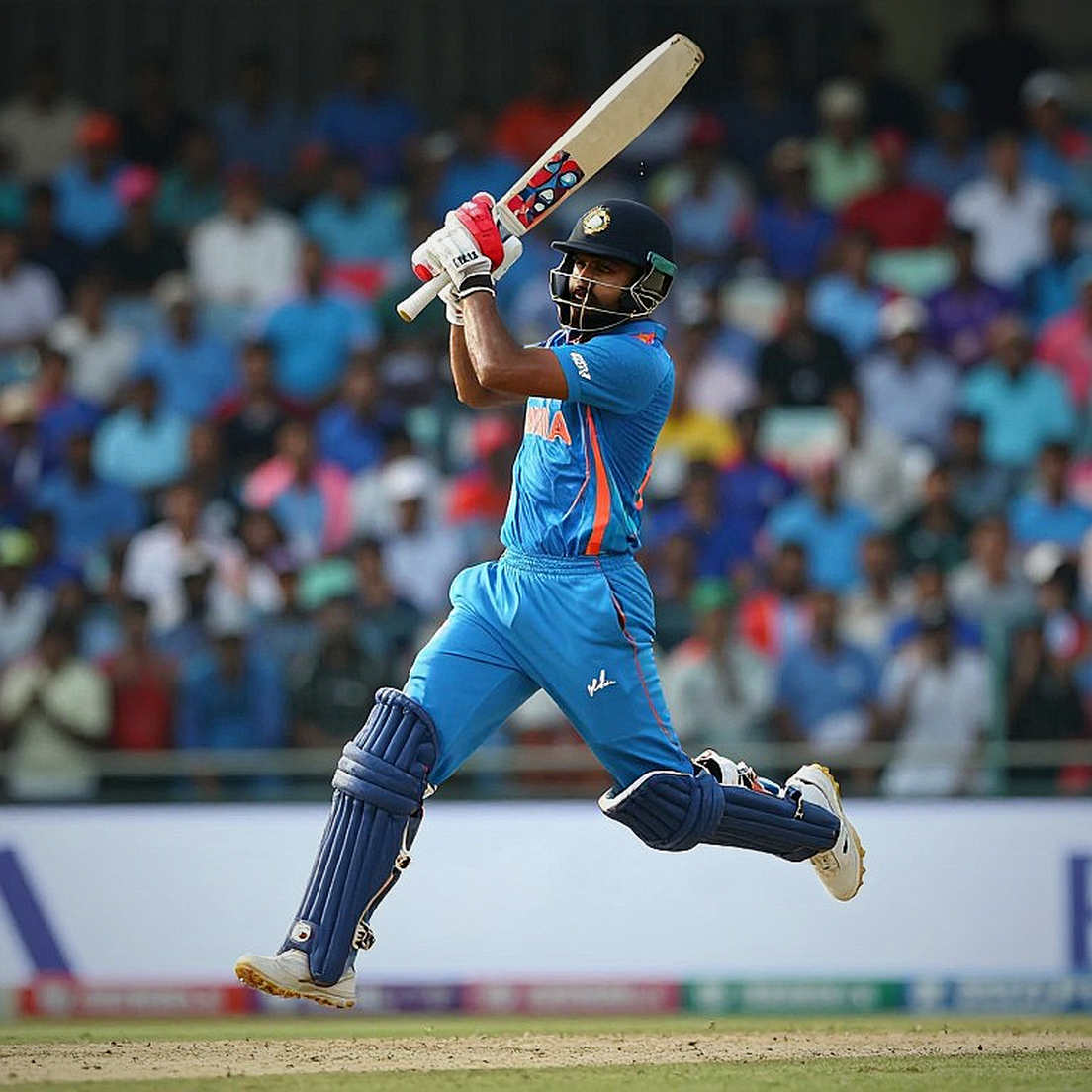
First, age. Twenty-four—the opening of the peak development window for a T20 allrounder. At this age, 130-plus white-ball matches means a high density of experience. For a 24-year-old, that number is not unusual, but in the context of women's cricket it is notable. Pakistani women's players generally get fewer international matches—series against Zimbabwe, Ireland and the Netherlands are limited, and against top sides they often play little.
Then her record. A 15-ball half-century is a ceiling indicator, not a floor. It proves she can bat explosively under extreme pressure, particularly in the death overs. In the WBBL, where death-over run rate decides matches, that ability is expensive. But one caution is essential: a single burst and full-season consistency are two different things. A 15-ball innings shows her ceiling; it does not show a sustained strike rate. Confusing the two is a common error in my profession.
The biggest data caution lies here: Fatima Sana's 15-ball half-century reveals the ceiling of her potential, but her true value in the WBBL will be determined by full-season consistency, not a single explosion.
Turning to her bowling, the picture becomes subtler. Right-arm medium-fast, and Perth's WACA Ground is historically favourable to seam bowlers. Bounce and effective pace—this combination may give Fatima Sana some advantage at the WACA. Australian pitches generally offer more bounce, a challenge for bowlers accustomed to the low, slow surfaces of the subcontinent, but also an opportunity for medium-fast seamers. Yet there is a data vacuum here: what is her bowling economy, particularly in the powerplay and at the death? For Pakistani pacers this information is often scattered, because live scorecards frequently do not preserve phase-based bowling data. So I stay cautious.
Perth's bouncy pitch is theoretically favourable to Fatima's medium-fast bowling, but the absence of phase-based economy data means this advantage is not yet proven, only possible.
Her captaincy adds another layer. Becoming national captain at 24 is rare, and it is an index of the PCB's internal trust. But captaincy has a hidden cost—mental load. In an overseas league, a captain's mental state differs; there she is not the team's leader but a hired professional. This role change is not easy for any player, and for a young captain it is a genuine test.
The overseas quota is an economic reality. In the WBBL, typically two overseas players can feature in a starting XI. That constraint means when Scorchers chose Fatima Sana, they released another overseas allrounder. It is an indirect index of her value. In franchise cricket, each overseas slot is a limited resource, and deciding who gets it is a strategic choice, not merely a talent choice.
The Hundred experience matters here. Playing for Birmingham Phoenix this year means she has already played in a high-pressure franchise environment. English conditions and Australian conditions differ, but the mentality of league cricket—squad competition, role definition, quick decisions in short innings—will accelerate her Perth adaptation. A player who has once succeeded in an overseas league environment needs less time to adjust in a second league.
Now the question is what this contract's context is. To understand what Fatima Sana's entry into the WBBL structure means, one must understand the reality of Pakistani women's cricket. The Pakistan women's team is competitive in Asia, but its record against Australia, England and India is weak. A major reason for this gap is inequality of opportunity. Indian, Australian and English players receive superior domestic structures, more matches and more investment from childhood. For Pakistani women's players, that opportunity is far less.
So Fatima Sana's WBBL contract is a personal success, but its larger significance is that it is a gateway. If she performs well, the path may open for other Pakistani women. This is known as the pipeline effect. But caution is needed: one successful case is not systemic change. Changing a system requires many successful cases.
I can say from my Khulna experience that when a model shows an exception, it is not a system change—it is only a data point. Fatima Sana's contract is still a data point. If in the next two or three years more Pakistani women go to the WBBL or WPL, then we can speak of a trend. The spreadsheet was my prayer mat; the data, my daily office—and in that office, every exception is viewed with suspicion.
Nida Dar's 2026 experience is a comparative reference here. She played eleven matches for Sydney Thunder, but then no Pakistani woman played in the WBBL for six years. Why? The answer is not only in talent; the answer is in the calendar, permissions and the structure of opportunity. The PCB's overseas league policy, limited agent support for women players, and the congestion of the international calendar—these three factors together created a silent barrier. Nida Dar's case proves the path is possible, but not easy.
Now to the angle no one wants to state. Part of the enthusiasm around this contract is actually marketing language. "One of the most exciting young allrounders in world cricket"—this sentence is a franchise's promotional statement. Marketing language is not always analytical truth. It magnifies the player, because the club also needs marketing. I am not calling the sentence false, but treating it as data would be an error.
The commercial logic of this contract is no less than the sporting logic. Pakistan's cricket-viewing market is vast; if the WBBL wants to reach a Pakistani audience, signing Pakistan's captain is a smart market strategy. Fatima herself said "cheered on by people back home"—that sentence is actually the clue to the commercial logic.
Second, the calendar conflict. Fatima Sana can play the first eight matches of WBBL 12. Then in December comes Pakistan's training camp ahead of the West Indies tour. If she receives PCB permission, she can miss the camp and play more. That word "if" is the real story. Because it concedes that the deal is not fully settled. An unsettled deal means an unsettled future.
There is a theoretical conflict here. The national team wants the player prepared; the league wants the player available. The interests of the two sides do not fully align. If the December West Indies tour dates are not yet finalised, the conflict can be eased. But if the dates are fixed, the PCB must make a hard decision—player development or team preparation?
Third, the limits of the body. In the same year, The Hundred and the WBBL—two different continents, different conditions, different time zones. Travel, circadian disruption, adaptation—there is a cumulative fatigue in all of this. Professional players manage it, but in women's cricket, where medical and rest structures are not as rich as in the men's game, this load is a genuine risk. A 24-year-old's body is still developing; there is a price to chasing multiple leagues.
Fourth, I want to add a human dimension, because data sometimes turns a player into an input. For a woman cricketer who comes from a conservative society, playing in an overseas league means more than cricket—it means personal courage, family support, cultural adaptation. The phrase "dream come true" here is not a marketing line; it is a genuine feeling that testifies to her long journey. The press box taught me humility: noise is data too, and so is silence.
There is one more dimension—control. Without PCB approval, Fatima Sana cannot play in an overseas league. This NOC system is an instrument of control. If the PCB permits, it is a permissive stance; if not, a strict one. Fatima Sana's case is a test of the PCB's women's cricket policy. Nida Dar's 2026 case proves the PCB has granted permission before, but that was six years ago. Policy continuity is not yet proven.
The WBBL's commercial structure must also be understood. Australia's broadcast market is increasing investment in women's cricket, but it is not the equal of the IPL. WBBL player salaries are moderate by IPL standards—top overseas players typically earn AUD 50,000 to 100,000 a year. Fatima Sana's specific salary has not been disclosed. Whether it is a full-season salary for eight matches or a pro-rated amount is unknown. This financial opacity is normal, but it suggests the deal is more strategic than sporting.
The betting and fantasy market side is small. The WBBL betting market is far smaller than the IPL, so the direct betting impact of a player's signing is limited. But in the long run, if women's cricket's visibility grows, so will this market. The internationalisation of players like Fatima Sana is a driver of that growth.
According to my model, three scenarios are possible. The worst case: the PCB denies permission, Fatima stops after eight matches, and friction develops between club and player. The middle case: the PCB grants partial permission and she plays a few more matches. The best case: the PCB grants full permission, she plays the whole season, performs well, and it opens the path for other Pakistani women. I will not assign specific probabilities to these scenarios, because the information is incomplete. But I can say the middle scenario is most likely, because both sides usually have some willingness to compromise.
So what does Fatima Sana's Perth journey signal? It must be read at three levels. At the sporting level—it is an opportunity for her development, where the WACA's bouncy pitch may favour her medium-fast bowling. At the industry level—it is a signal of the internationalisation of Pakistani women's cricket, a test of the PCB's overseas league policy. At the system level—it is still a data point, not a trend.
Over the coming months I will watch three things. First, the PCB's decision—whether it allows Fatima Sana to play more in the WBBL. Second, her performance data—especially her economy in the powerplay and at the death. Third, other Pakistani women's overseas league contracts—if that grows, we can speak of a trend.
I trust the model, but I audit the story it tells. Fatima Sana's story is still being written—and its first chapter begins at Perth's WACA Ground this coming October. The question is: will this contract open a door for Pakistani women's cricket, or will it remain merely a brilliant exception?