
India 48-24 Nepal: The Scoreline That Hides Its Own Story
**মূল উত্তর:** ভারত মহিলা কাবাডি দল ২০২৬ এশিয়ান Gamesের সেমিফাইনালে নেপালকে ৪৮-২৪ পয়েন্টে হারিয়েছে। ভারত তিনটি অল আউট করেছে, যার দুটি প্রথমার্ধে, এবং বিরতিতে এগিয়ে ছিল ৩১-১৭। ফাইনাল শনিবার, ২৬ সেপ্টেম্বর, ২০২৬, টোকাই সিটিজেন্স জিমনেশিয়াম, নাগোয়া। **মূল তথ্য:** - ভারত ৩৫টি রেইড পয়েন্ট পেয়েছে; প্রথমার্ধে পেয়েছিল ২৩টি। - সানজু দেবীকে ভারতের রেইডিং আক্রমণের কেন্দ্র হিসেবে উল্লেখ করা হয়েছে; ব্যক্তিগত পয়েন্ট দেওয়া হয়নি। - নেপাল প্রথমার্ধে ১৩টি টাচ পয়েন্ট পেয়ে দ্বিতীয়ার্ধে নেমে আসে পাঁচে। - নেপাল একটি সুপার ট্যাকল পেয়েছে, যার মূল্য দুই পয়েন্ট। - ফাইনালে ভারতের প্রতিপক্ষ হবে ইরান বনাম চাইনিজ তাইপেই সেমিফাইনালের বিজয়ী। **সূত্র:** Khel Now (ভারতীয় ডিজিটাল ক্রীড়া সংবাদমাধ্যম), এশিয়ান Games ২০২৬ মহিলা কাবাডি সেমিফাইনাল ম্যাচ রিপোর্ট, সেপ্টেম্বর ২০২৬। **সম্পর্কিত প্রশ্নোত্তর:** প্রশ্ন: ভারত কি ফাইনালে ফেভারিট? — উত্তর: হ্যাঁ, তবে নেপালের বিরুদ্ধে এই জয় প্রতিযোগিতামূলক প্রমাণ দেয় না; প্রকৃত পরীক্ষা ইরানের বিরুদ্ধে। প্রশ্ন: মহিলা কাবাডিতে পেশাদার League আছে কি? — উত্তর: নেই; পুরুষদের প্রো কাবাডি Leagueের কোনো মহিলা সমতুল্য সংস্করণ নেই। প্রশ্ন: রিপোর্টে নেপালের '১৮ পয়েন্ট' বলা হয়েছে কেন? — উত্তর: ওই সংখ্যাটি সম্ভবত নেপালের শুধু টাচ পয়েন্ট; মোট স্কোর ছিল ২৪।
Tokai Citizens Gymnasium, Nagoya. The halftime whistle blew with the board reading 31-17. Fourteen points. An Asian Games semifinal, and Nepal were only fourteen points behind. Twenty minutes later the scoreline read 48-24. Anyone reading only the final number would assume a one-sided rout. But the most important fact of the evening was written on the halftime board, and almost everyone skipped past it.

Nepal scored 13 touch points in the first half. They managed five in the second. The gap between those two numbers is the real story of the night.
Kabaddi has been a medal sport at the Asian Games since 2026. This tournament runs on Standard Style — a rectangular court, seven against seven, two twenty-minute halves. For anyone watching kabaddi for the first time, three rules need to be understood first, otherwise the arithmetic inside this scoreline stays invisible.
A raider crosses into the opponent's half with thirty seconds on the clock. In those thirty seconds they must tag a defender and return safely, and they cannot stop chanting 'kabaddi' for even a moment on the way back — that continuous chant is the only proof they are not inhaling.
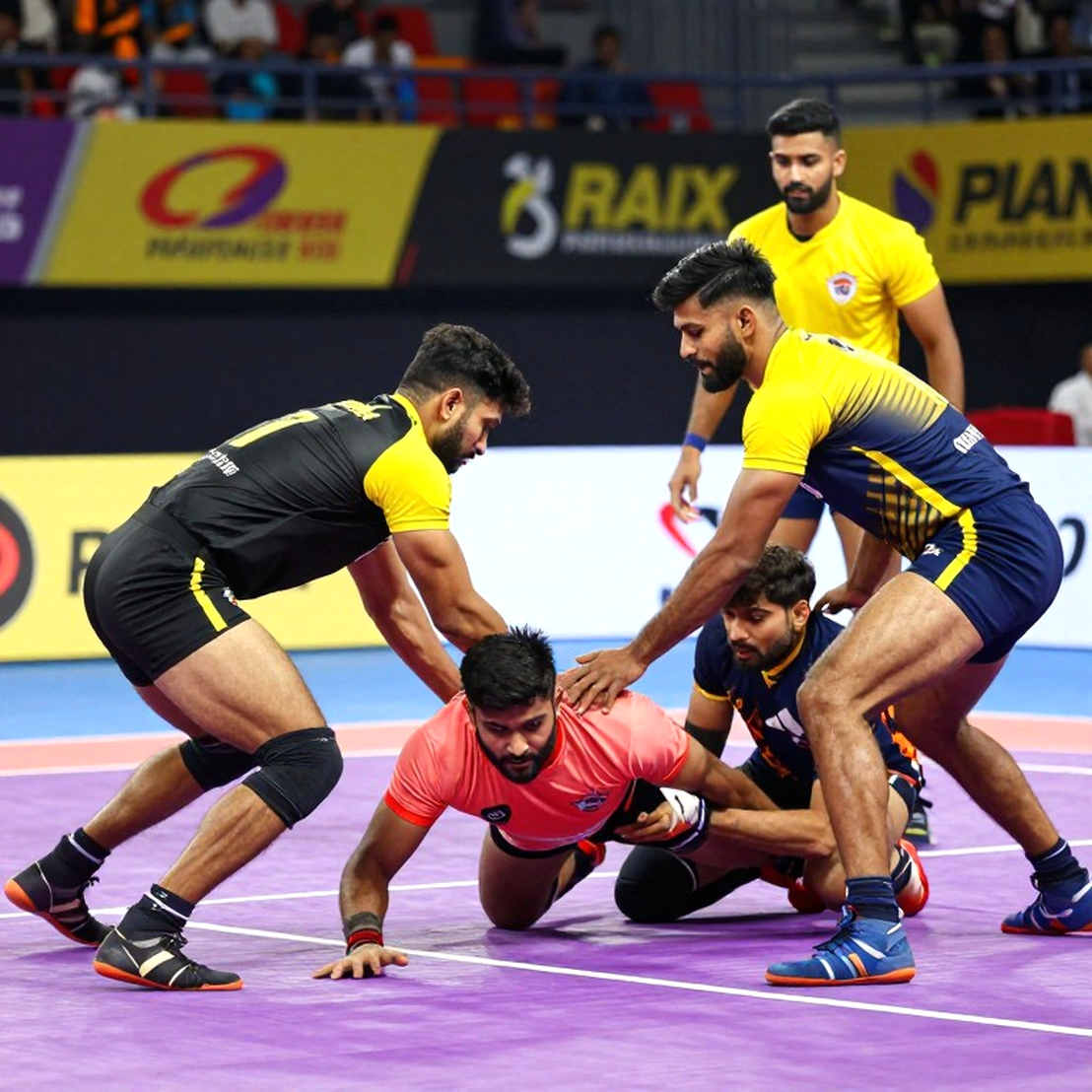
Then comes the most important rule of all: the all out. When all seven players of one side are dismissed, the opponent earns two bonus points and the entire team is revived onto the court. In football, going down to ten men changes the character of a match; in kabaddi the opposite happens — a team is wiped out and returns at full strength. Every time that reset fires, the weaker side gets a fresh chance to collapse again. There is also the bonus line — a mark deep in the opponent's half worth one point, but only if the defence still has six or more players on court. And the super tackle: a tackle made with three or fewer defenders on court, worth two points instead of one.
Once you know these rules, 48-24 stops looking like a sudden explosion. It is an equation — and India understood that equation while Nepal did not.
India collected 35 raid points and forced three all outs, two of them in the first half. That is where the real story hides. Two first-half all outs mean Nepal were twice handed a full-strength restart — and India broke them both times. What the scoreboard presents as a huge margin is really the same scene on repeat: collapse, reset, collapse.
This is why I never judge a kabaddi side off a scoreline alone. Watching kabaddi and football side by side for years taught me one thing above all: just as corner counts cannot measure the quality of a football attack, raid points alone cannot measure raiding strength in kabaddi. You have to measure how many times a team rebuilt its structure between all outs.
Add the bonus-line usage to that. India took four bonus points in the first half. That is not safe touch-and-return kabaddi; that is deliberate deep penetration. The bonus line is not empty space; it is a trap meant to pull the defence in. When a raider crosses it, the two defensive corners drift slightly inward, and that exact gap becomes the target on the next raid.
Nepal's first half was not bad at all. The fourteen-point halftime gap existed only because India timed its raids for the moments that mattered. In the second half Nepal's touch points fell to five, and their single bright moment of the entire evening was one super tackle.
A word on that super tackle. In a match lost by four or seven goals, the one goal that is scored gets the most replays — a super tackle works exactly the same way. It is worth two points, but it has no power to change the trajectory of a match. The condition that made it possible — a defence reduced to three — is itself evidence of the real crisis, and nobody remembers that part.
And Sanju Devi? The report places her at the centre of India's raiding threat, crediting her with repeatedly breaking Nepal's line. The problem is that no individual raid-point total is given anywhere. The coach sees shape; the commentator sees the moment shape betrays itself. Reading this report, we see neither. Without knowing how much of India's 35 raid points belong to Sanju Devi and how much to others, reaching any conclusion about 'over-reliance on one player' is impossible. Sometimes the absence of the number is the biggest piece of information there is.
A word of caution is due here. At one point the report states Nepal 'secured only 18 points'. But the final score is 48-24, and the half-by-half breakdown sums to roughly 22 (13 plus 5 touch points, 2 bonus, 1 super tackle). The eighteen almost certainly represents Nepal's touch points only, not their total. In any match analysis, a single inconsistency like this is a reminder that one number is never enough — you have to read several sources together.
Now to the uncomfortable part. India won the semifinal by twenty-four points. But from this win over Nepal we learned almost nothing about India's true level. Nepal reaching a semifinal is a sign of regional development — and simultaneously a sign of how thin the field is. Iran and Chinese Taipei, one of whom will reach the final, are the real test. Predicting a final off a twenty-four-point win is exactly as dangerous as writing a champion's obituary off an easy group-stage scoreline.
The second discomfort runs deeper. Nepal's second-half collapse — from 13 touch points down to five — will be explained away as a lack of ability. That is half true at best. Kabaddi is a sport where effort is the easiest thing to measure and the most misleading thing to trust. Distance covered, high-intensity sprints, number of runs — these numbers look excellent, but if a player runs in the wrong place, the beautiful figure is precisely what hides the actual problem. Nepal ran in the first half, built tackle chains, and scored 13 points. In the second half, when India's raiders changed their angles, those chains broke.
Because chain tackling is a coordination job, not a courage job. In kabaddi the eye catches the tackle; the eye misses the chain. Nepal conceded two all outs in the first half while fielding near-full strength — proof that the problem sat in the collective defensive instinct, not in anyone's willpower.
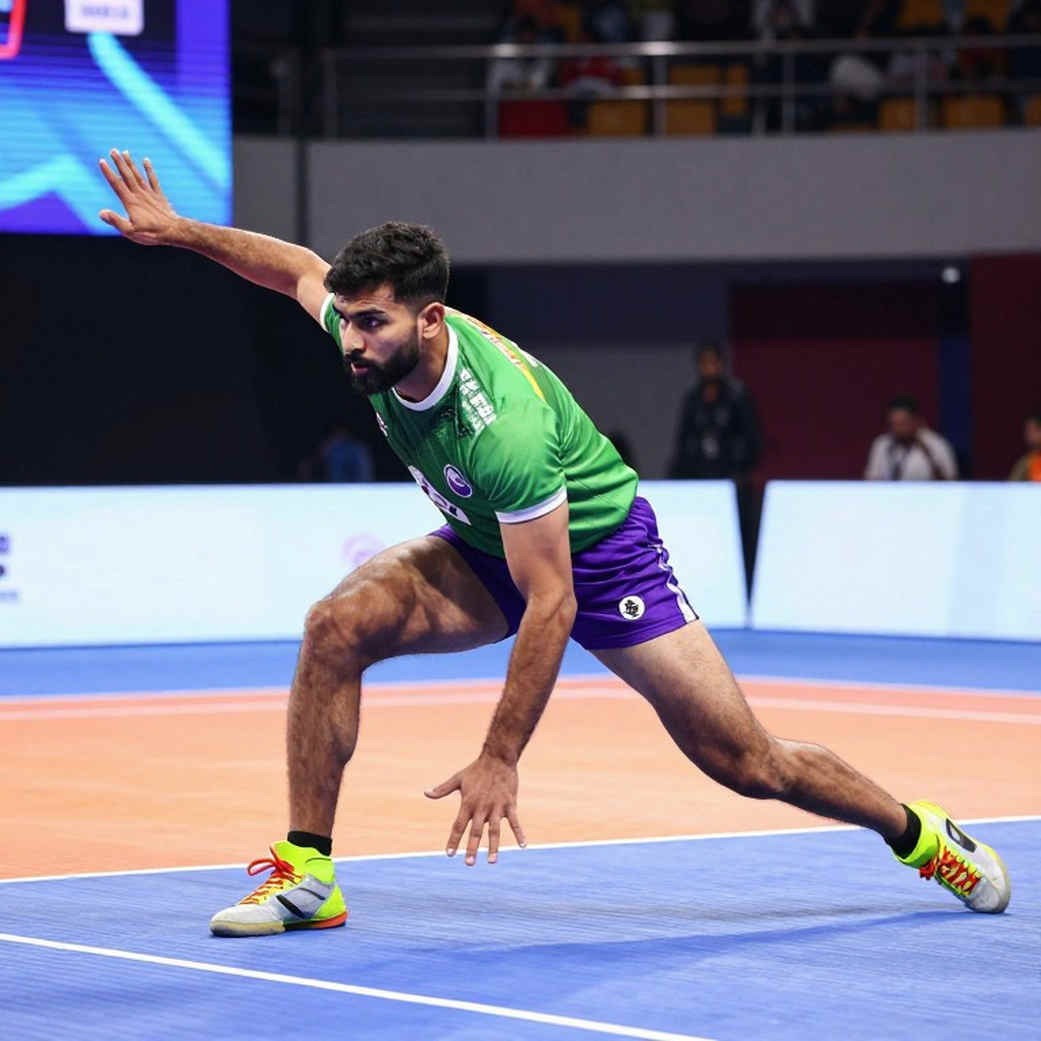
The third uncomfortable truth lies outside this report but is the biggest question for the sport's future. India's men's Pro Kabaddi League put kabaddi into prime-time television — auctions, franchises, salaries, brands. There is no equivalent league for women. Which means however bright this 48-24 scoreline looks, its path into league revenue, player salaries, or sponsorship markets is close to closed. India keep winning matches, but the structure that is supposed to stand behind those wins does not exist.
So what do we watch in the final? First, who India face at Tokai Citizens Gymnasium on Saturday, September 26, 2026. If Iran advance, it is a genuine contest; if Chinese Taipei advance, the gold is no longer in question. Second, Sanju Devi's successful-raid rate — how much of India's 35 raid points belongs to one player and how much to the system. Third, and most importantly, whether any women's professional league announcement follows this win.
Systems fail quietly, long before the scoreboard confesses. And the 48-24 scoreboard has not yet confessed that in this semifinal, India proved nothing at all.