
A 42–21 Win, but India's Real Women's Kabaddi Test Arrives on 23 September
মূল উত্তর: ভারত ২০২৬ এশিয়ান Gamesের নারী কাবাডি গ্রুপ এ-র উদ্বোধনী ম্যাচে বাংলাদেশকে ৪২–২১ পয়েন্টে হারিয়েছে। ভারতের ৪২ পয়েন্টের মধ্যে ১১ পয়েন্ট বোনাস লাইন থেকে ও ৪ পয়েন্ট দুই অল আউট থেকে এসেছে; বাংলাদেশের ২১ পয়েন্টে ছিল মাত্র একটি সুপার ট্যাকল। মূল তথ্য: - ইভেন্ট: এশিয়ান Games ২০২৬, নারী কাবাডি গ্রুপ এ, আইচি-নাগোয়া, স্ট্যান্ডার্ড স্টাইল, ২০ মিনিটের দুই অর্ধ। - স্কোর: ভারত ৪২, বাংলাদেশ ২১; মাঝবিরতিতে ভারত এগিয়ে ছিল ২১–১০। - ভারতের ৪২ পয়েন্টে ১১ বোনাস পয়েন্ট, দুই অল আউট (৪ পয়েন্ট), বাকিটা টাচ ও ট্যাকল থেকে। - বাংলাদেশের ২১ পয়েন্টে ৫ বোনাস পয়েন্ট ও ১ সুপার ট্যাকল; আক্রমণভার প্রধানত অধিনায়ক স্রাবনী মল্লিকের উপর। - Next ম্যাচ: ভারত বনাম ইরান, ২৩ সেপ্টেম্বর ২০২৬, সকাল ৮টা ৩০ মিনিট। সূত্র: মূল সূত্র: Khel Now-এর ম্যাচ রিপোর্ট (এশিয়ান Games ২০২৬, নারী কাবাডি)। প্রকাশের নির্দিষ্ট তারিখ সূত্রে উল্লেখ নেই; ম্যাচটি ২০২৬ সালের সেপ্টেম্বরে অনুষ্ঠিত। স্কোর-বিভাজনের Statistics নামবিহীন সূত্র থেকে এসেছে, তাই যাচাই বাকি। সম্ভাব্য Search: প্রশ্ন: ভারতের পরের প্রতিপক্ষ কে? উত্তর: ইরান, ২৩ সেপ্টেম্বর ২০২৬, গ্রুপ এ-র ম্যাচ। প্রশ্ন: ভারতের স্কোরিং কতটা ছড়ানো ছিল? উত্তর: অন্তত চারজন রেইডার — সঞ্জু দেবী, সোনালি শিনগাতে, পুষ্পা রানা ও পূজা। প্রশ্ন: মেয়েদের কাবাডিতে পেশাদার League আছে কি? উত্তর: নেই; প্রো কাবাডি League শুধু পুরুষদের জন্য, তাই নারীদের সবচেয়ে বড় মঞ্চ মূলত এশিয়ান Games।
21–10 at half-time. I put the tea down and turned the page. The final margin read 42–21, but the real signal had arrived before the break, and it was not in any individual raider's flourish. It was in the internal arithmetic of India's 42 points: 11 from the bonus line, 4 from two All Outs, the rest from touches and tackles. Bangladesh's 21 told the mirror story — a single Super Tackle, and almost the entire attacking load on one player's shoulders.
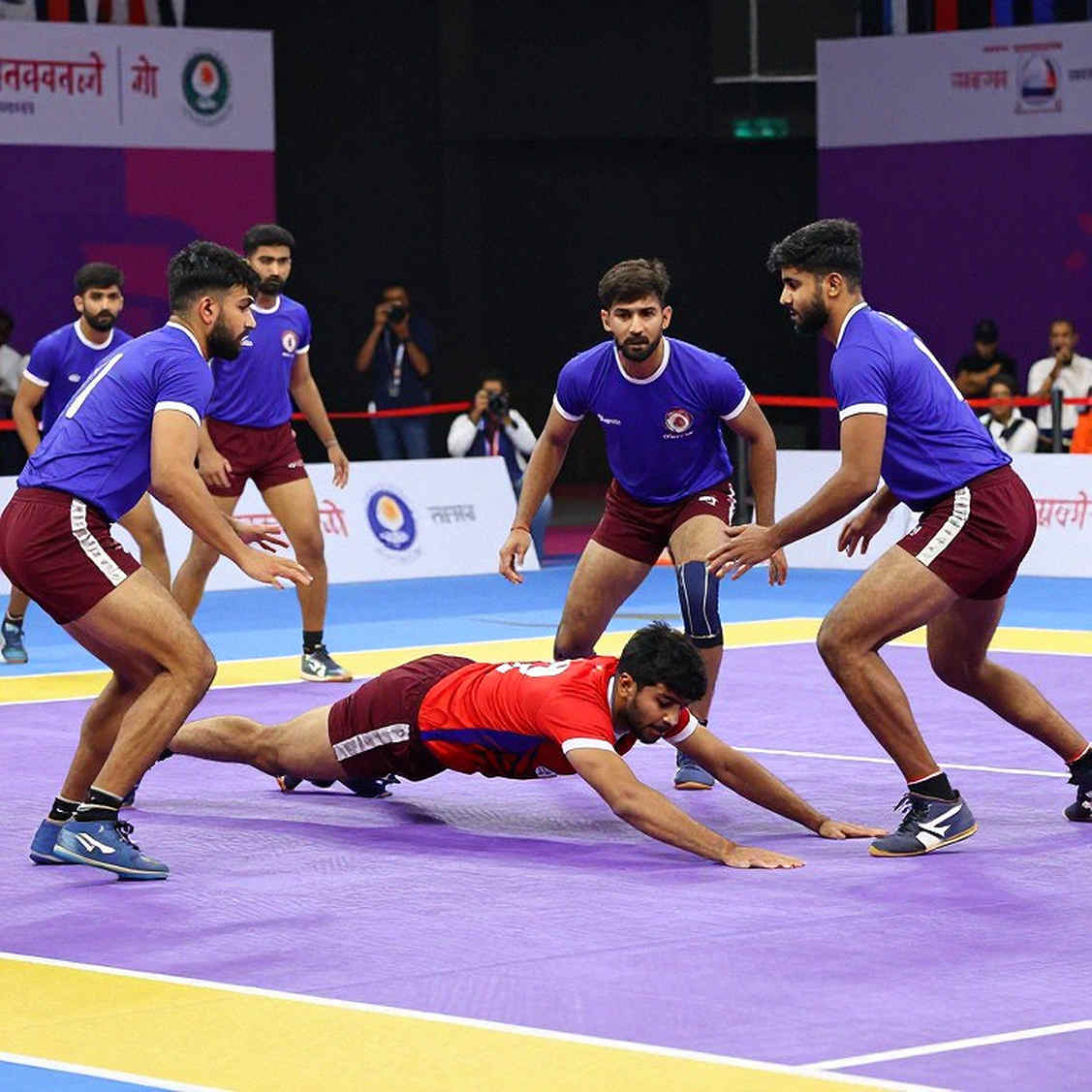
For readers who do not follow kabaddi: the raider enters the opponent's half within 30 seconds and scores by touching a defender and returning safely. The 'kabaddi kabaddi' chant cannot break; if it does, the raid is void. Defenders score by stopping the raider inside their own half. The bonus line sits deep in enemy territory and pays one point when six or more defenders are on court — a reward for raiding into the crowd. When every player on a side is out, that is an All Out: the opponent gets two points and the routed team returns in full. That rule is why kabaddi's big leads are never safe.
This was the Group A opener of women's kabaddi at the 2026 Asian Games in Aichi-Nagoya, Standard Style: rectangular court, seven against seven, two 20-minute halves. India's name carried 'defending champion'. Bangladesh's carried nothing, even though kabaddi is the national sport there. That contradiction never shows up on a scoreboard.
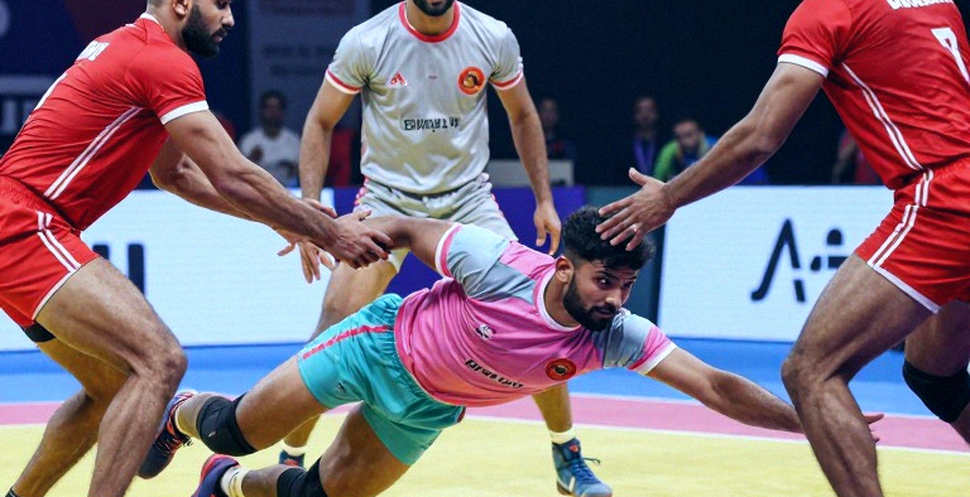
Twelve years of notebook-keeping between Delhi, Tokyo and Doha taught me one rule of thumb: the locker room tells you the score before the scoreboard ever does. For women's kabaddi the rule bites harder, because there is no professional league. In the bio-bubble, every hallway whisper became a transfer clue; for the women I have sat with, most of those whispers lead nowhere, because the doors they would knock on do not exist for them. I walked in a fan and left with the team.

Inside the bonus-line number
Eleven of India's 42 points came off the bonus line — roughly a quarter of the total. That is a decision statistic rather than a volume statistic. India repeatedly chose to raid deep into a crowd of six or more defenders. And the most tactical sentence in the whole report is the one saying India made it hard for Bangladesh to reach the bonus line. An aggressive high defensive line forces the opposing raider back empty-handed; empty raids pile up and eventually push a side into do-or-die raids. In a lopsided match, a winning team that never appears in a do-or-die situation is a team whose raids stayed productive throughout.
Two All Outs deserve separate mention. Twice the entire Bangladesh unit was wiped off the mat. In kabaddi an All Out carries two points and a full revival of the opponent, which makes it a structural blow rather than a scoring one. India delivered it twice.
Four shoulders, not one
Sanju Devi led India's offence, and when the lead narrowed she restored it. Around her: Sonali Shingate, captain Pushpa Rana, and Pooja, whose quick hand touches stood out. At least four named scorers is a healthy signal — contain one raider and the scoreboard does not stop. In defence, Manisha Kumari was effective from left cover; cover is the interior post beside the corner, and competence there usually indicates a well-drilled defensive unit.
Bangladesh's picture inverts. Captain Sraboni Mollick kept her side on the scoreboard almost alone. That is structural risk: neutralise her and the scoring base erodes. Their one bright moment was a Super Tackle — a tackle completed with three or fewer defenders on court, worth two points. Outnumbered and still stopping the raider: that is the only place the scoreboard admits Bangladesh's resilience.
What 21 points actually measures
The 42–21 margin does not measure a talent gap between India and Bangladesh. It measures an institutional one. Kabaddi is Bangladesh's national sport, so the participation base is wide; coaching, strength and conditioning, and competitive-league exposure keep the elite ceiling low. India has no women's professional league either, but its national-team pathway is smoother, and railway, police and armed-forces jobs plus awards like the Arjuna keep players inside the system. Bangladesh has no comparable retention mechanism. That gap hides inside the 21 points.
Empty stadiums taught me that silence has its own formation. Women's kabaddi often plays to half-empty galleries, and in the camera frame that silence says which sports are worth broadcasting and which are not.
Where the outside reading goes wrong
The easy reading is 'India dominant, title defence on track'. It pulls in two wrong directions. First, the lead narrowed inside the last five minutes. Against Bangladesh that is cosmetic; against Iran it can become a pattern. Second, a bonus-heavy, deep-raiding style can be opponent-specific — it is easier to raid into a crowd that cannot punish you, and Iran's wrestling-derived physicality and defensive discipline are a different question. Third, transparency is thin: no successful-raid percentage, no individual tackle counts, no named statistical source. What the report calls disciplined defence is asserted, not measured. Fourth, the source is a routine match report with a promotional block, calling the win a 'dominant all-round display'. Low editorial depth is not tactical evidence.
There is a reverse reading too. Bangladesh's brief fightback and that single Super Tackle are exactly the seeds of a future pipeline in a 'wide but shallow' structure — if anyone waters them.
The signals ahead
23 September 2026, 8:30 a.m. India against Iran. A group fixture on paper, effectively a gold-medal match. The report itself calls Iran formidable. Three signals go into my notebook: how far Sanju Devi's raid efficiency falls against an elite defence; whether India's defensive discipline holds through the final quarter; and whether the courage to cross the bonus line survives contact with Iran. Those three answers will say more than a 21-point margin ever could about whether this side came to defend a title or merely looks good against the easy draw.